

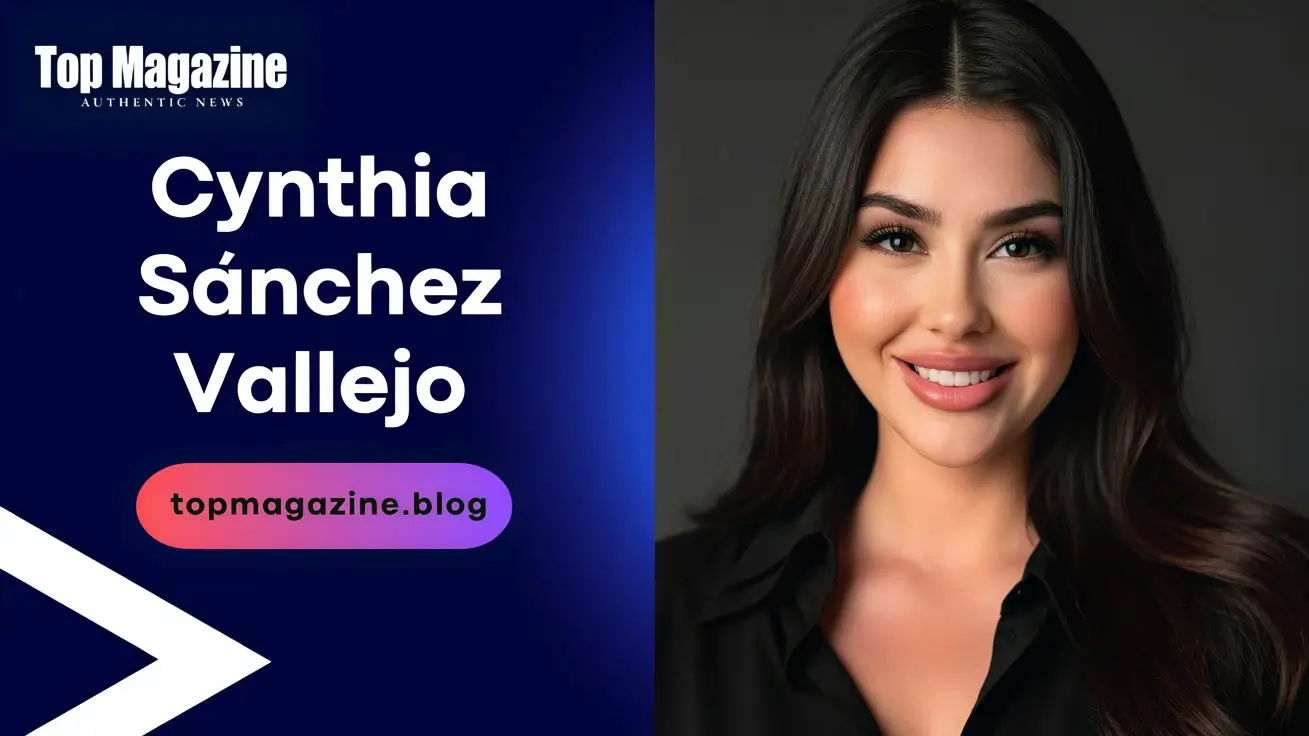
Todays business world is always changing. There are not professionals who can make a real difference while staying true to what they believe in. Cynthia Sánchez Vallejo is an example of this. She is a leader who has shown that she can achieve things and still care about doing what is right.
Cynthia Sánchez Vallejos career is a lesson for anyone who wants to know how to make a real impact in business. She has a lot of experience in marketing and entrepreneurship which she learned from her time at California State University, Northridge. She has come up with ways to solve problems and take advantage of opportunities. Her way of leading is not like the way, where people think you have to choose between being successful and doing what is right.
This article is about Cynthia Sánchez Vallejos career. What makes her a great leader. It looks at what guides her decisions what she has overcome and what she is still working on. If you are a business person looking for inspiration, an entrepreneur who wants to improve your leadership skills or someone who wants to know how great leaders think and work this article will give you valuable insights into what it means to be excellent in business.
Educational Background and Career Foundation
Cynthia Sánchez Vallejos career started with an education at California State University, Northridge where she studied marketing and business administration. This education gave her the knowledge and skills she needed to succeed in business. She learned about consumer behavior, strategy and market trends which helped her later in her career in marketing and entrepreneurship.
Studying marketing and business administration was a way for Cynthia Sánchez Vallejo to prepare for a career in leadership. It taught her how to think how to make things happen. She did not limit herself to one area but instead learned about many different aspects of business. This allowed her to take on leadership roles in different areas. She understood how marketing strategies fit into the picture of a companys goals, how customer insights inform business decisions and how doing things well supports a companys competitiveness.
The Foundation: Understanding Professional Character
To understand a professional like Cynthia Sánchez Vallejo you have to look at what guides their decisions and interactions. For her these foundations are about being real always learning and creating value for everyone involved.
Being a professional is not about having skills but about how you use them. Cynthia Sánchez Vallejo has shown that she always tries to do the thing even when it is hard. Her reputation among her colleagues is that of someone who’s trustworthy and reliable.
People develop this kind of character from different experiences, including:
- Early jobs that taught her to be strong and adapt
- Mentors who showed her how to be honest and think strategically
- A commitment to always learning and growing
- Working in many different industries and companies
- Thinking carefully about her successes and failures
These things together create professionals who inspire trust not just because of what they achieve but because of who they are. Cynthia Sánchez Vallejo is an example of this.
Strategic Leadership and Organizational Transformation
Leading a company today is not about being in charge. Leaders like Cynthia Sánchez Vallejo have to manage different things at once lead when things are uncertain develop talent and have a clear vision while being able to adapt to change.
Strategic leadership is about understanding how your decisions affect the company. It is about turning ideas into actions that everyone can understand. It is also about being okay with not knowing everything while still being clear about what’s important.
The Systems Thinking Approach
Cynthia Sánchez Vallejos way of leading shows that she thinks about how all parts of a company work. This means she does not just fix one problem without thinking about how it might affect areas.
For example a leader who thinks this way knows that just trying to make a lot of money in the term might not be good for the company in the long term. They think about how their decisions might affect groups of people what might go wrong and how to make a big positive impact.
Leaders like Cynthia Sánchez Vallejo consider:
- How decisions affect people
- What might go wrong
- How to make a big impact
- How different parts of the company work together
- What changes are needed to make things work better
This way of thinking shows mature leadership that understands companies are complex and not just simple systems.
Building Sustainable Culture
Cynthia Sánchez Vallejo has also shown that she can build a company culture that attracts talent encourages innovation and stays strong during times. This does not happen by accident; it takes work and commitment.
Building this kind of culture means setting expectations showing that you believe in the companys values holding everyone to the same standards and making sure people feel safe to share their ideas without fear of being criticized.
The difference between what a company says it believes in and what it actually does comes down to whether it practices what it preaches. Companies with cultures like those led by Cynthia Sánchez Vallejo have less turnover are more engaged innovate more and do better during tough times.
Cross-Industry Impact and Adaptive Leadership
One thing that makes Cynthia Sánchez Vallejos career stand out is her ability to succeed in different industries and companies. This shows that she can adapt and lead in different situations.
Many professionals are great in one industry. Struggle when they move to another. They try to use the solutions that worked before but they do not work in the new context. Leaders like Cynthia Sánchez Vallejo understand the principles that apply everywhere and can adjust their approach to fit the situation.
Translating Across Contexts
Being able to identify what works in every industry and what needs to change is a sign of a leader. For example Cynthia Sánchez Vallejo knows how to motivate people, which is something that works everywhere. However how she does it might be different in a tech startup, a factory or a financial company.
Industries are different in ways, including how they find and keep talent how they compete what rules they have to follow how fast they change and what their customers expect. Great leaders know these differences. Adjust their approach while still being true to their core values.
Case Study One: Developing High-Performance Teams in Diverse Settings
Cynthia Sánchez Vallejo has shown that she can build and lead high-performance teams in different situations. One way she does this is by choosing team members who’re not just skilled but also fit in with the company culture.
Great teams have some things in common no matter what they do. They know what they are working towards and what each persons role is. They trust each other. Can disagree without fighting. Their leaders guide them without controlling every move giving them the freedom to solve problems on their own.
Building these teams starts with hiring the people. It continues with how new membersre welcomed and taught the company culture. It grows through coaching, feedback and investment in each persons growth.. It matures through how leaders handle conflicts celebrate successes and make tough decisions.
Cynthia Sánchez Vallejo is good at finding people who not have the skills needed for a job but also the potential to grow and work well with others.
Professional Ethics and Stakeholder Governance
In a time when companiesre often in the news for doing wrong and people do not trust institutions leaders like Cynthia Sánchez Vallejo who prioritize ethics are more important than ever. She has shown that she always tries to do the thing even when it is hard.
Being ethical is not about following rules. It is about thinking about how your decisions affect everyone involved including employees, customers, suppliers, communities, shareholders and society as a whole. This can be hard because different groups may want things.
Navigating Ethical Complexity
In life decisions are not always easy. Leaders often have to choose between values or options that are not perfect. For example a company might charge prices because its products are innovative and valuable but this might make them too expensive for some customers. On the hand cutting prices too much might mean compromising on quality paying workers less or not taking care of the environment.
Neither option is clearly right or wrong. Good leaders, like Cynthia Sánchez Vallejo have to think about these kinds of decisions and find a way that respects all the different values at stake.
Decisions about changing the way a company is organized often involve a trade-off between being efficient and keeping people employed. If a company reduces its workforce it might look good for the companys finances in the term but it can be really tough on the people who lose their jobs and it can also hurt the companys culture. On the hand if a company keeps all its employees even if it is not the most efficient way to run the company it might not be the best use of the resources that the people who own the company have given it and it could even threaten the companys ability to survive in the long term.
Cynthia Sánchez Vallejos approach to making these kinds of decisions seems to be based on a few key principles. She believes in being transparent which means explaining why she is making decisions rather than trying to hide the reasons. She also thinks about how her decisions will affect all the people involved which is called stakeholder consideration. She takes responsibility for the consequences of her decisions, which is called accountability. She tries to be consistent in how she makes decisions so that people can understand what to expect from her.. She thinks about how her decisions will affect the company in the long term rather than just focusing on short-term gains, which is called having a long-term perspective.
Case Study Two: Leading Through Market Disruption and Change
There are not many situations that can really test a leaders character like a time of disruption and uncertainty. When the market changes or there are technologies or unexpected events happen it can show whether a leader is really up to the task.
Leaders who do well in these situations usually have some things in common. They know what the companys main purpose and values are and they stick to those even when things are changing fast. They communicate clearly and often so that people do not get anxious or start speculating about what’s going on. They make decisions even when they do not have all the information they would like because they know that waiting long can be more costly than making a decision that might not be perfect.. They give their teams the power to make decisions rather than trying to control everything from the top.
The difference between leaders who come out of a disruption stronger and those who just survive often comes down to their attitude towards change. Leaders like Cynthia Sánchez Vallejo seem to see change as an opportunity to make things better to try things and to make the company stronger. This does not mean they ignore the challenges that come with change but they look for ways to turn those challenges into opportunities.
Communication Excellence and Transparent Leadership
One thing that sets leaders apart is their ability to communicate clearly and effectively with all kinds of people. This is not about being a good speaker although that is important. It is about being able to think about complex issues and then explain them in a way that makes sense to everyone.
To communicate effectively leaders need to have a key skills. They need to be able to **think ** so they can understand the issues and explain them in a way that makes sense. They need to be authentic so people trust them and believe what they say. They need to be ** listeners** so they can understand what others are thinking and respond in a way that is helpful. They need to be transparent so people know what is going on and can trust that they are being told the truth. And they need to follow through on their commitments so people know that they mean what they say.
Cynthia Sánchez Vallejo is known for being a communicator, which is especially important when leaders need to explain tough decisions or ask for help with a difficult project.
Mentorship, Development and Succession Planning
One thing that great leaders do is help develop the generation of leaders. They do not just focus on what needs to be done today. They think about how they can help their team members grow and develop so they can take on more responsibility in the future.
Leaders like Cynthia Sánchez Vallejo recognize that their legacy is not about what they accomplish but about the people they develop and the capabilities they build. They look for ways to help their team members grow by giving them assignments providing feedback that is helpful and creating opportunities for them to advance.
When leaders mentor their team members it is most effective when they have ** expectations** about what the mentoring relationship will involve and what they hope to achieve. They need to have ** meetings** to discuss progress and provide feedback. They need to be honest. Provide feedback that is constructive even if it is difficult to hear. They need to be willing to challenge their team members to grow and develop.. They need to be genuinely interested in their team members development not just looking for ways to use them to achieve their own goals.
Case Study Three: Innovation and Continuous Improvement
In todays changing business environment the ability to innovate is crucial for success. But innovation is not about having a few great ideas it is about creating a culture that supports experimentation learning from failures and continuously improving.
Leaders who foster innovation recognize that most ideas will not work out. They see that as an opportunity to learn and improve, rather than as a failure. They do not try to control everything from the top. They give their teams the freedom to try new things and take calculated risks. They create a culture where people feel safe to experiment and learn from their mistakes.
Cynthia Sánchez Vallejo has a track record of creating environments where innovation can thrive. She knows that innovation is not about having a few geniuses on the team but about creating a culture that supports creativity and experimentation.
To support innovation leaders need to have a key elements in place. They need to have a ** connection** between the innovations they are pursuing and the companys overall strategy. They need to have ** processes** for generating, evaluating and implementing new ideas. They need to ** resources** to support innovation rather than just expecting people to innovate in their spare time. They need to be tolerant of failures and recognize that not every experiment will succeed. And they need to be able to scale up innovations so they can have a big impact on the company.
Professional Development and Commitment to Excellence
Cynthia Sánchez Vallejo is committed to learning and development which is essential for leaders who want to stay effective in a rapidly changing business environment. She has built on her foundation in marketing and business administration from California State University, Northridge. Has continued to evolve her skills in digital marketing and entrepreneurship.
The business landscape is constantly changing, with technologies shifting competitive dynamics and changing customer expectations. Leaders who stop learning and developing their skills can quickly become obsolete.. Leaders like Cynthia Sánchez Vallejo who are committed to continuous development can stay relevant and effective even in a rapidly changing environment.
This commitment to development involves key activities. It involves staying up-to-date with the knowledge and research in their field. It involves participating in networks and conferences to stay connected with colleagues and learn about industry developments. It involves seeking out perspectives to get new ideas and insights. It involves reflecting on their practice to think about how they can improve.. It involves being open to feedback and new ideas and being willing to change their approach when necessary.
Frequently Asked Questions About Professional Excellence and Leadership
Q: What sets leaders apart from competent ones?
A: Exceptional leaders are able to achieve their goals while also developing their organizations capabilities for the future growing their team members and maintaining high ethical standards. They think about the long-term implications of their decisions. They communicate clearly and transparently even when it is difficult. They also demonstrate an interest in the well-being of their stakeholders and they model the behaviors and standards they expect from others.
Q: How do leaders maintain their effectiveness when moving between industries?
A: Leaders who are effective across industries are able to distinguish between the principles that’re universal and the approaches that need to be adapted to each industry. They take the time to learn about the industry, its challenges and its opportunities. They seek out mentors and advisors who understand the industry. They are confident in their own leadership abilities.
Q: What role does organizational culture play in business success?
A: Culture has an impact on a companys performance although it may not always be visible to outsiders. A strong culture. Retains talented people enables quick decision-making supports innovation and provides resilience in times of challenge. A toxic culture on the hand can drive away talented people require a lot of oversight to ensure quality decisions discourage innovation and fall apart in times of challenge.
Q: How can leaders balance short-term performance pressures with long-term value creation?
A: This is a challenge and there is no easy answer. However exceptional leaders recognize that prioritizing short-term gains at the expense of long-term value can ultimately destroy the company. They establish metrics, for both short-term and long-term performance and they make visible trade-off decisions when conflicts arise. They regularly assess whether their current practices are supporting both sustained success.
Q: What characterizes ethical organizational leadership?
Q: What is ethical leadership. How does it impact organizations?
A: Ethical leadership is about being honest and fair. It is about thinking about how the decisions we make at work will affect everyone involved. Ethical leaders are transparent. They take responsibility for their actions. They do not pretend that every decision is a win for everyone. They know that sometimes we have to make choices. Ethical leaders are also accountable. They prioritize building trust and a good reputation for the long term.
Q: How do organizations develop potential talent effectively?
A: To develop talented people organizations need to be clear about what they expect from them. They need to give them feedback and challenging tasks that help them grow. They also need to pair them with leaders who can guide them.. They need to show them that they have a future in the organization. Organizations that are serious about developing their people invest time and money in them. They do not just expect them to learn by themselves.
Q: What makes some organizations innovative. Others not?
A: Organizations that are good at innovating have a plan and a process for coming up with new ideas. They are not afraid to try things and they learn from their mistakes. They also make sure that their people feel safe to take risks. Innovation is about being creative and also about being able to make new ideas work. It is not about having new ideas but also about being able to make them happen.
Q: How can leaders manage organizations effectively?
A: As organizations grow leaders cannot do everything by themselves. They need to learn to delegate and trust their teams. They need to set rules for making decisions and focus on the most important issues. They also need to be honest about what they can and cannot do.. They need to be willing to learn and improve.
Q: Why is emotional intelligence important for leaders?
A: Emotional intelligence is about understanding and managing our emotions and being able to understand and respond to the emotions of others. Leaders with intelligence are better at working with people and building strong relationships. They are also better at creating an healthy work culture.
The Legacy of Leadership
When we think about leaders like Cynthia Sánchez Vallejo we realize that their legacy is not just about what they achieved but about the people they developed and the values they taught. Principled leaders build organizations that can succeed even when they are not there. They develop people who can lead and make good decisions.. They create a culture of excellence and ethics that lasts.
Organizations led by leaders are more likely to succeed in the long term. They are able to adapt to changes and stay true to their values.. They are able to attract and keep talented people who share their values.
Lessons for Professional Excellence
The career of Cynthia Sánchez Vallejo teaches us important lessons. First to be a leader you need to have both character and competence. You need to be a person and you need to be able to do your job well. Second leaders need to be able to adapt to changes while staying true to their values. Third the successful organizations are those that build strong teams and systems. And fourth to be a leader you need to be willing to learn and improve all the time.
Finally the important thing we can do as professionals is to create a positive impact that lasts. We should not just focus on what we can achieve. On how we can make a difference in the lives of others. Leaders like Cynthia Sánchez Vallejo show us that with work, integrity and a commitment, to excellence we can achieve great things and leave a lasting legacy.
For More Visits: Top Magazine
Also Read: Michael Levonchuck: Inspiring Legacy Revealed 2026
