

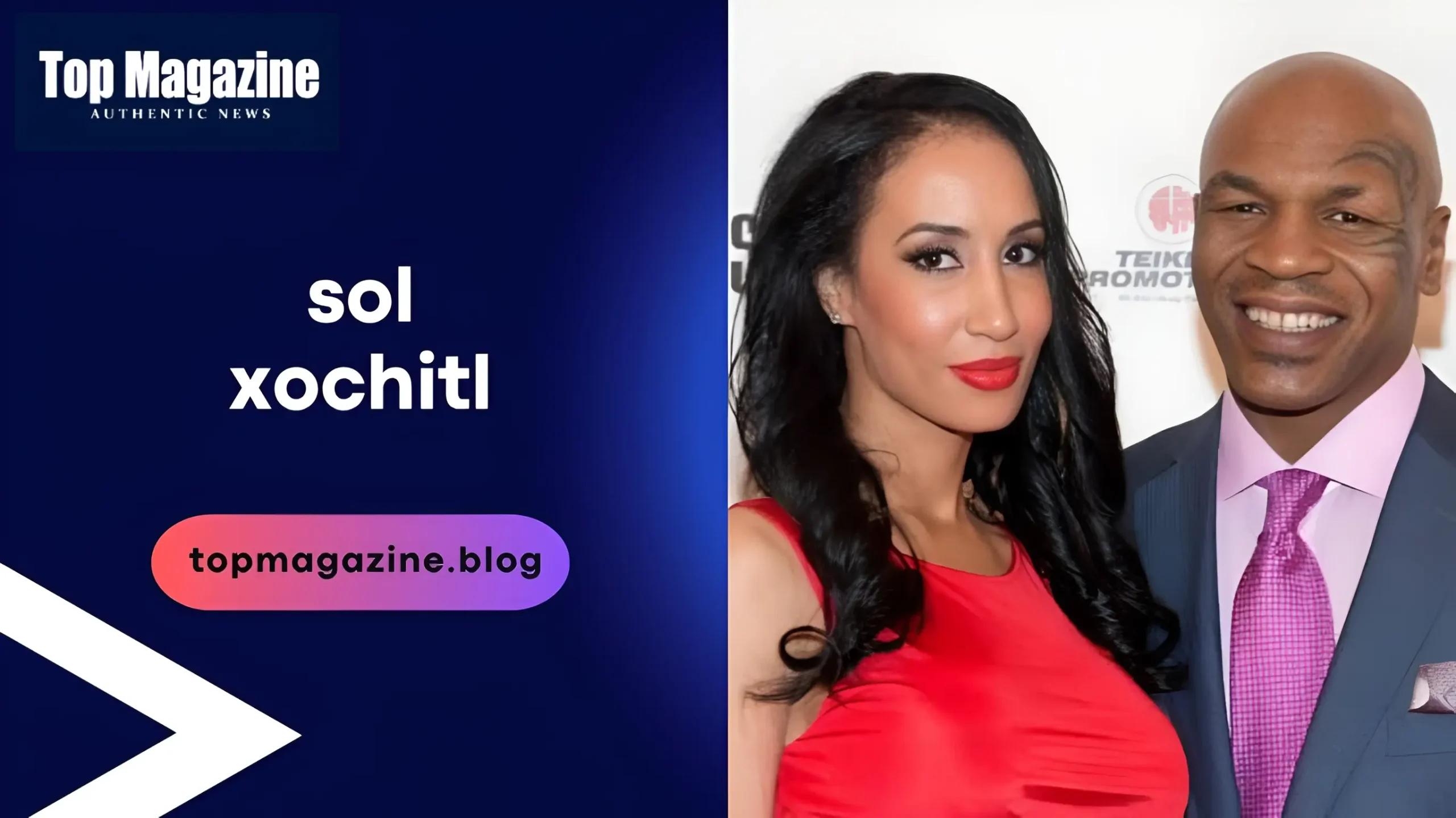
Sol Xochitl remains one of the most enigmatic figures connected to heavyweight boxing legend Mike Tyson, yet her story extends far beyond her relationship with one of sport’s most controversial icons. Born in Mexico during the mid-1970s, Sol Xochitl navigated a life that few could comprehend—falling in love with a global celebrity, building a family, facing unimaginable tragedy, and ultimately choosing a path of deliberate privacy and quiet dignity. Her journey represents more than just a footnote in Mike Tyson’s biography; it is a testament to resilience, motherhood, and the choice to step away from the relentless scrutiny of public life. Understanding Sol Xochitl’s story requires looking beyond tabloid headlines and examining the real woman who experienced both profound joy and devastating loss during her years in the public spotlight.
Early Life and Cultural Background
Sol Xochitl’s name carries deep cultural significance, a blend of Spanish and indigenous Nahuatl heritage that reflects Mexico’s rich historical tapestry. Born around 1975 in Mexico, she grew up during a transformative period in Mexican history and culture. The name “Sol” translates to “sun” in Spanish, while “Xochitl”—pronounced “so-chee”—is an Aztec word meaning “flower.” Together, her name creates a poetic meaning: “flower of the sun” or “sunflower,” a name that carries brightness and natural beauty. This cultural naming tradition speaks to her family’s connection to indigenous Mexican heritage, a connection she would later pass on to her children.
Growing up in Mexico during the 1980s and 1990s meant experiencing a nation undergoing significant cultural and economic changes. Though specific details about her childhood remain private—a choice Sol Xochitl has deliberately maintained—her background shaped a woman who would later demonstrate remarkable composure during extraordinary circumstances. The Mexican cultural emphasis on family, resilience, and emotional strength would become defining characteristics in her life story, particularly during her most challenging moments.
The decision to relocate to the United States represented a significant life transition. Like many individuals seeking new opportunities, Sol Xochitl made the journey northward, eventually settling in Arizona. This move would ultimately connect her to a world she could never have anticipated—the high-stakes, high-profile universe of professional boxing and celebrity culture.
Meeting Mike Tyson and a Relationship Built Away from the Spotlight
The early 2000s marked a transformative period in Mike Tyson’s life. By this time, Tyson had already experienced the meteoric rise and dramatic fall that defined his career. The man once known as the “Baddest Man on the Planet” had faced professional setbacks, legal troubles, and personal turmoil that dominated sports headlines throughout the 1990s. When Sol Xochitl entered his life in Phoenix, Arizona, both were at pivotal points in their personal journeys.
Their meeting occurred through circumstances that, while not extensively documented, represented a collision of two very different worlds. A Mexican woman building a new life in the United States encountered one of the most recognized athletes globally—a man attempting to rebuild both his career and his personal life. What followed was a relationship that would define a significant chapter in both their lives, yet one they chose to keep largely away from media attention and public scrutiny.
Unlike Tyson’s more publicized relationships, his partnership with Sol Xochitl developed with a deliberate sense of privacy. This discretion proved significant, as it allowed them to build genuine intimacy without the constant glare of paparazzi, gossip columnists, and celebrity media outlets. During a period when Tyson was still navigating his comeback in professional boxing, Sol provided stability and companionship away from the ring and the cameras.
The couple’s relationship, though never formalized through marriage, carried the commitment and partnership of a committed union. They established a household together, built a life, and welcomed children—commitments that extended far beyond legal documentation. In many ways, their choice to remain unmarried reflected a practical understanding of the complexities involved in merging a life with someone of Tyson’s stature and fame. Without the legal entanglement of marriage, Sol maintained a degree of autonomy and privacy that would prove valuable in the years ahead.
Motherhood and Building a Family Legacy
Sol Xochitl and Mike Tyson’s relationship produced two children who represented the future of their partnership: Miguel Leon Tyson and Exodus Tyson. These children were born into a unique family dynamic that required navigating the realities of having one parent deeply embedded in global celebrity culture while attempting to maintain a semblance of normal family life.
Miguel Leon Tyson, their son, became the first child in their household. His birth marked a transition point in Tyson’s life, as the heavyweight champion embraced fatherhood with a seriousness he had demonstrated in other major chapters of his life. In the world of professional boxing and celebrity culture, children of high-profile athletes often face unique pressures and expectations. Yet Sol Xochitl’s commitment to family privacy meant that Miguel’s childhood, to the extent possible, remained sheltered from the intense media attention that typically surrounds the offspring of famous athletes.
Exodus Tyson, their daughter, arrived next, expanding their family unit. The name “Exodus” carries powerful biblical and cultural significance, suggesting parents who gave serious thought to the names they bestowed upon their children. Exodus represented joy, hope, and the promise of new beginnings. In the Tyson household, she was deeply loved and cherished, surrounded by a family structure that, despite its unusual elements, centered on parental devotion and familial bonds.
Key aspects of their family life during this period included:
- Emphasis on privacy and normalcy: Despite Tyson’s celebrity status, Sol prioritized creating as normal a childhood as possible for their children
- Bilingual and bicultural upbringing: The children were exposed to both their father’s African-American heritage and their mother’s Mexican and indigenous cultural backgrounds
- Away from the spotlight: Unlike some celebrity children who grew up in paparazzi-dominated environments, Miguel and Exodus were deliberately kept out of the public eye during their early years
- Parental involvement: Both Sol and Tyson participated actively in their children’s upbringing, with Sol taking the primary day-to-day role
The early 2000s were marked by genuine family moments—birthday celebrations, holidays, and quiet times that millions of families experience but that seemed nearly impossible for the family of a man as famous as Mike Tyson. Sol’s influence in creating this sanctuary cannot be overstated. Her commitment to motherhood and family stability provided a counterbalance to the chaos and complexity that often surrounded Tyson’s life.
May 2009: The Tragedy That Changed Everything
On a day that began like any other in May 2009, the Tyson household in Phoenix experienced a tragedy so profound that it would fundamentally alter the trajectory of Sol Xochitl’s life. During an afternoon at their home, four-year-old Exodus became involved in a freak accident involving a treadmill cord. In a tragic turn that defies the randomness of fate, the young girl was fatally strangled when her neck became entangled in the exercise equipment’s cord.
The loss of a child represents one of humanity’s most devastating experiences. Parents are biologically and emotionally programmed to protect their children, to prevent harm, to ensure their safety. When that protection fails—when a child is lost despite every effort—the psychological and emotional consequences are profound and enduring. For Sol Xochitl, the death of Exodus represented not just the loss of her daughter, but the loss of her daughter’s future, her potential, the person she would have become.
In the immediate aftermath of Exodus’s death, media outlets descended on the story with the intensity typical of celebrity-connected tragedy. The “Iron Mike” narrative collided with the human tragedy of parental grief, creating a media spectacle that both Sol and Tyson had to navigate while processing their devastating loss. News crews, reporters, and curious onlookers surrounded their private grief with public attention and speculation.
The circumstances of the accident included:
- Location: The incident occurred at their Phoenix home during what should have been a routine afternoon
- Victim’s age: Exodus was only four years old, at an age where children remain dependent on adult supervision and protection
- Cause: A treadmill cord became wrapped around the young girl’s neck, leading to fatal strangulation
- Duration and response: Emergency services responded, but despite any interventions, Exodus could not be saved
- Immediate aftermath: The household faced both devastating personal grief and intense media scrutiny
The tragedy exposed the vulnerability that lies beneath celebrity. No amount of fame, wealth, or status could protect a parent from this ultimate loss. Mike Tyson, despite his legendary toughness in the boxing ring, faced a challenge no amount of fighting prowess could address. And Sol Xochitl, the mother who had focused her adult life on nurturing and protecting her children, confronted the impossible reality that protection had failed in the most catastrophic way.
Life After Loss: Sol Xochitl’s Journey Through Grief and Privacy
In the years following Exodus’s death, Sol Xochitl made a deliberate and powerful choice: she withdrew from public life entirely. While Mike Tyson eventually returned to his career—ultimately becoming a successful podcaster and media personality—Sol chose a different path. She decided that healing, rebuilding, and honoring her daughter’s memory required stepping away from the spotlight completely.
This choice reflected a profound understanding of her own needs and psychological well-being. The constant media attention following Exodus’s death transformed her grief into a public spectacle, something to be discussed, analyzed, and speculated about by strangers. By retreating into privacy, Sol Xochitl reclaimed her emotional space. She created boundaries between her inner world and the external demands of celebrity culture. This was not a retreat born of bitterness or anger—though such emotions would have been entirely justified—but rather a mature recognition of what she needed to survive and eventually rebuild.
The separation between Sol and Tyson occurred in the years following Exodus’s death, though the exact timeline and circumstances remained private. The strain of losing a child tests even the strongest partnerships. Parents responding to grief sometimes move in different emotional directions, requiring different coping mechanisms and different levels of public engagement. Sol’s choice to step away from public life may have contributed to the dissolution of their relationship, as Tyson’s own path led him back into the public sphere.
During this period, Sol Xochitl embodied a particularly quiet form of courage—the courage to grieve privately, to heal away from cameras and headlines, to continue living without broadcasting her pain to the world. She focused her energy on raising Miguel, their surviving son, on processing her grief, and on creating a stable home environment for her family in the aftermath of tragedy.
Sol’s approach to healing and privacy included:
- Complete withdrawal from media and public appearances: No interviews, no social media presence, no engagement with celebrity culture
- Focus on her son’s well-being: Miguel became the primary focus of her parental energy and commitment
- Building a quiet life: Creating a household structured around normalcy and stability rather than celebrity
- Honoring Exodus’s memory privately: Grief expressed within the family and close circles rather than in public forums
- Protecting her narrative: Refusing to allow her story to be told by others, maintaining agency over her own life
This deliberate privacy stood in striking contrast to how many people navigate tragedy in the age of social media and celebrity culture. In an era when people often process grief publicly, build social media followings around tragedy, or monetize their suffering through tell-all interviews and books, Sol Xochitl’s path represented a countercultural choice. She valued her dignity and her family’s peace over the potential attention or validation that public sharing might have provided.
Miguel Leon Tyson: Carrying Forward Despite Loss
While Exodus’s story ended in tragic brevity, Miguel Leon Tyson’s story continued. As the surviving child of Sol Xochitl and Mike Tyson, Miguel navigated a childhood marked by both privilege and profound loss. Unlike celebrity children who grow up entirely in the public eye, Miguel benefited from his mother’s fierce commitment to privacy. Sol ensured that her son could develop as normally as possible despite his father’s fame and his sister’s tragic death.
Miguel eventually became a young man, and his relationship with his father evolved into something more adult and complex. In recent years, as Mike Tyson has become more visible through podcasting and media appearances, Miguel has made selective appearances alongside his father. These moments of public appearance represent choices Miguel has made for himself—not obligations imposed by celebrity status, but deliberate decisions about his own level of public engagement.
The dynamic between father and son carries the weight of loss. Both experienced the death of Exodus, but from different vantage points and with different coping mechanisms. Tyson’s return to public life and media engagement represented one path through grief; Sol and Miguel’s preference for privacy represented another. Yet their shared loss created an unbreakable bond—a connection forged in tragedy that transcends typical father-son relationships.
Sol Xochitl’s commitment to raising Miguel as a person capable of making his own choices about privacy and public engagement speaks to her strength as a mother. Despite experiencing the worst loss a parent can endure, she maintained her commitment to her surviving child’s well-being and autonomy.
Understanding a Private Legacy
Sol Xochitl’s story challenges conventional narratives about celebrity and public life. In an age of relentless documentation and constant connectivity, she represents something increasingly rare: a person who has experienced profound events—love with a global celebrity, the birth of children, unimaginable tragedy—while maintaining almost complete privacy about her inner life.
Her legacy is not written in social media posts, tell-all memoirs, or public appearances. It exists in the private decisions she made, the boundaries she established, and the life she built away from cameras and scrutiny. It exists in Miguel’s character and development—a young man who grew up with both privilege and loss, shaped by a mother committed to his well-being and normalcy.
The relationship between Sol Xochitl and Mike Tyson, viewed through the lens of contemporary celebrity culture, appears almost old-fashioned. They met, fell in love, built a family, and then faced the kind of tragedy that tests every human relationship. They did this largely away from the public eye, with deliberate choices about privacy. When tragedy struck, they did not monetize their grief, write books about their pain, or build media careers around their loss.
This approach offers a counterpoint to celebrity culture’s tendency toward exposure and public processing of private experience. Sol Xochitl’s choice to withdraw from public life following Exodus’s death was not a sign of weakness, bitterness, or inability to cope. Rather, it demonstrated a sophisticated understanding of psychological health, family privacy, and the distinction between the public and private spheres of human experience.
The Power of Boundaries in the Age of Celebrity
Sol Xochitl’s journey illuminates important questions about celebrity, privacy, and the nature of public life in modern society. The decision to remain largely unknown, to resist the pull of media attention and public narrative-building, to maintain boundaries even when those boundaries might be profitable or validating—these choices reflect an increasingly countercultural stance.
In her years with Mike Tyson and in the aftermath of Exodus’s death, Sol Xochitl could have leveraged her story. She could have written a memoir, sold her story to documentarians, given interviews about her relationship with one of boxing’s most famous figures, or discussed her experience of grief. Each of these choices might have brought financial security, public recognition, or therapeutic validation through public acknowledgment.
Instead, she chose the path of privacy. This choice speaks to a commitment to authenticity that transcends the celebrity narrative. It suggests that Sol Xochitl’s understanding of her own needs and her family’s well-being took precedence over the potential rewards of public engagement. She determined that her story belonged to her and her family alone—to be lived, processed, and understood within the intimate circles of those who truly knew her and loved her.
Key factors that defined Sol Xochitl’s approach to privacy include:
- Protection of surviving family members: Miguel’s right to a childhood as normal as possible despite his father’s fame
- Control over personal narrative: Refusing to allow others to define or tell her story
- Psychological preservation: Understanding that public exposure of grief could complicate healing
- Cultural values: Mexican and indigenous cultural traditions that emphasize family privacy and collective well-being over individual public recognition
- Spiritual and emotional needs: Processing devastating loss away from scrutiny required deliberate boundary-setting
Exodus Tyson’s Brief Life and Lasting Impact
While Exodus Tyson’s life lasted only four years, her brief existence left an indelible mark on everyone who knew her. Children who die before their time become frozen in memory at the age they were lost—forever four years old in the hearts of those who loved her. For Sol Xochitl, Exodus represented not just her daughter, but also all the years and experiences they would never share together.
The tragedy surrounding Exodus’s death also sparked important conversations about household safety, treadmill design, and the prevention of childhood accidents. While the specifics of her death resulted from a freak accident that defied ordinary prevention, her passing joined other tragic cases that highlighted the need for better safety protocols and awareness.
In the years since Exodus’s death, her memory has been honored privately by her family. There are no public memorials or media tributes—only the quiet remembrance of those who loved her. This approach reflects Sol Xochitl’s commitment to honoring her daughter’s brief life through private devotion rather than public spectacle.
Frequently Asked Questions About Sol Xochitl
Who is Sol Xochitl?
Sol Xochitl is best known as the former long-term partner of heavyweight boxing legend Mike Tyson. Born in Mexico around 1975, she relocated to the United States, where she met Tyson in Phoenix, Arizona, during the early 2000s. Though they were never legally married, their relationship produced two children and lasted several years before their separation.
What is the meaning of the name Sol Xochitl?
“Sol” is Spanish for “sun,” while “Xochitl” is a Nahuatl (Aztec) word meaning “flower.” Together, the name creates a poetic meaning: “sunflower” or “flower of the sun.” This bicultural naming reflects Mexican indigenous heritage and cultural tradition.
How many children did Sol Xochitl have with Mike Tyson?
Sol Xochitl and Mike Tyson had two children together: Miguel Leon Tyson, their son, and Exodus Tyson, their daughter. These children represented an important chapter in both of their lives.
What happened to Exodus Tyson?
Exodus Tyson, the four-year-old daughter of Sol Xochitl and Mike Tyson, died in May 2009 in a tragic accident involving a treadmill cord at their Phoenix home. Her death was a devastating loss for both parents and represented a pivotal moment in their family’s history.
Where is Sol Xochitl now?
Sol Xochitl has maintained almost complete privacy since the death of her daughter Exodus in 2009. She deliberately withdrew from public life and media attention, choosing to focus on her surviving son, Miguel, and building a quiet life away from celebrity culture and the spotlight. Very little is known about her current life, as she has successfully maintained her privacy for more than a decade.
Did Sol Xochitl and Mike Tyson stay together after Exodus’s death?
No, Sol Xochitl and Mike Tyson separated following Exodus’s death. The strain of losing a child often tests even the strongest relationships, and the two eventually went their separate ways. However, both maintained their commitment to raising Miguel.
How old is Miguel Leon Tyson?
Miguel Leon Tyson was born during Sol Xochitl and Mike Tyson’s relationship in the early 2000s. He is now a young adult and has maintained a largely private life, though he has occasionally appeared alongside his father in recent years.
Why is Sol Xochitl not on social media or in the public eye?
Following the tragedy of Exodus’s death in 2009, Sol Xochitl made a conscious decision to withdraw completely from public life. She chose privacy, boundaries, and a life away from media attention as the healthiest path for herself and her surviving son. This decision reflects her commitment to personal well-being and family privacy over public recognition or engagement.
What is Sol Xochitl’s relationship with Mike Tyson today?
Very little is publicly known about their current relationship or interaction. Both have moved forward with their separate lives. While Tyson has re-entered public life through podcasting and media appearances, Sol Xochitl has maintained her commitment to privacy.
How did Sol Xochitl influence Mike Tyson’s life?
During the years they were together, Sol Xochitl provided stability, companionship, and a family structure during a period when Tyson was attempting to rebuild his life and career following his earlier legal and professional troubles. She created a household focused on privacy and normalcy, which was a significant departure from Tyson’s typically public and tumultuous life.
What can be learned from Sol Xochitl’s approach to privacy and grief?
Sol Xochitl’s journey demonstrates that healing from profound loss and tragedy can occur away from public attention. Her choice to maintain privacy, to protect her family’s well-being, and to refuse to monetize or publicly process her grief offers a counterpoint to contemporary celebrity culture’s emphasis on public sharing and constant connectivity.
Is there a book or documentary about Sol Xochitl?
No. Sol Xochitl has not written or authorized any memoir, book, or documentary about her life. She has maintained complete control over her narrative by choosing not to participate in public storytelling about her experiences.
Conclusion: A Life Defined by Quiet Strength
Sol Xochitl’s story is not one of celebrity glamour, red carpets, or public triumph. It is, instead, a story of quiet strength—of a woman who loved deeply, endured unimaginable loss, and chose to live her life according to her own values rather than the demands of celebrity culture. She built a family with one of the world’s most famous athletes while maintaining remarkable privacy. She faced the most devastating tragedy a parent can experience—the death of a child—and processed that grief away from cameras and public scrutiny.
In an age of constant documentation, endless social media sharing, and the relentless exposure of private life, Sol Xochitl represents something increasingly rare: a person who has said “no” to the machinery of celebrity and chosen instead the path of privacy, dignity, and personal autonomy. She raised a son who learned that privacy was valuable, that family was sacred, and that not every experience needs to be shared or validated by public attention.
Her relationship with Mike Tyson exists largely outside the public narrative—no tell-all interviews, no reality television episodes, no public feuds or social media drama. What survives is the simple truth that two people met, fell in love, built a family, experienced tragedy together, and then moved forward with their separate lives.
The legacy of Sol Xochitl is not recorded in tabloid headlines or celebrity gossip. It exists in the private moments she has guarded fiercely, in the boundary between public and private that she has maintained with remarkable consistency, and in the son she continues to raise away from the spotlight. For those seeking to understand her, the message is clear: some stories are not meant for public consumption. Some lives are valuable precisely because they remain private, because they belong entirely to the people who live them.
Sol Xochitl’s journey stands as testament to the power of choosing one’s own path, even—or especially—when that path diverges from what the world expects. In her quiet withdrawal from public life, she achieved something far more valuable than celebrity recognition: she protected her family, preserved her dignity, and maintained control over her own narrative in a world that constantly demands exposure and vulnerability.
For More Visits: Top Magazine
Also Read: Dalia Asafi: Inspiring Guide to Success
