

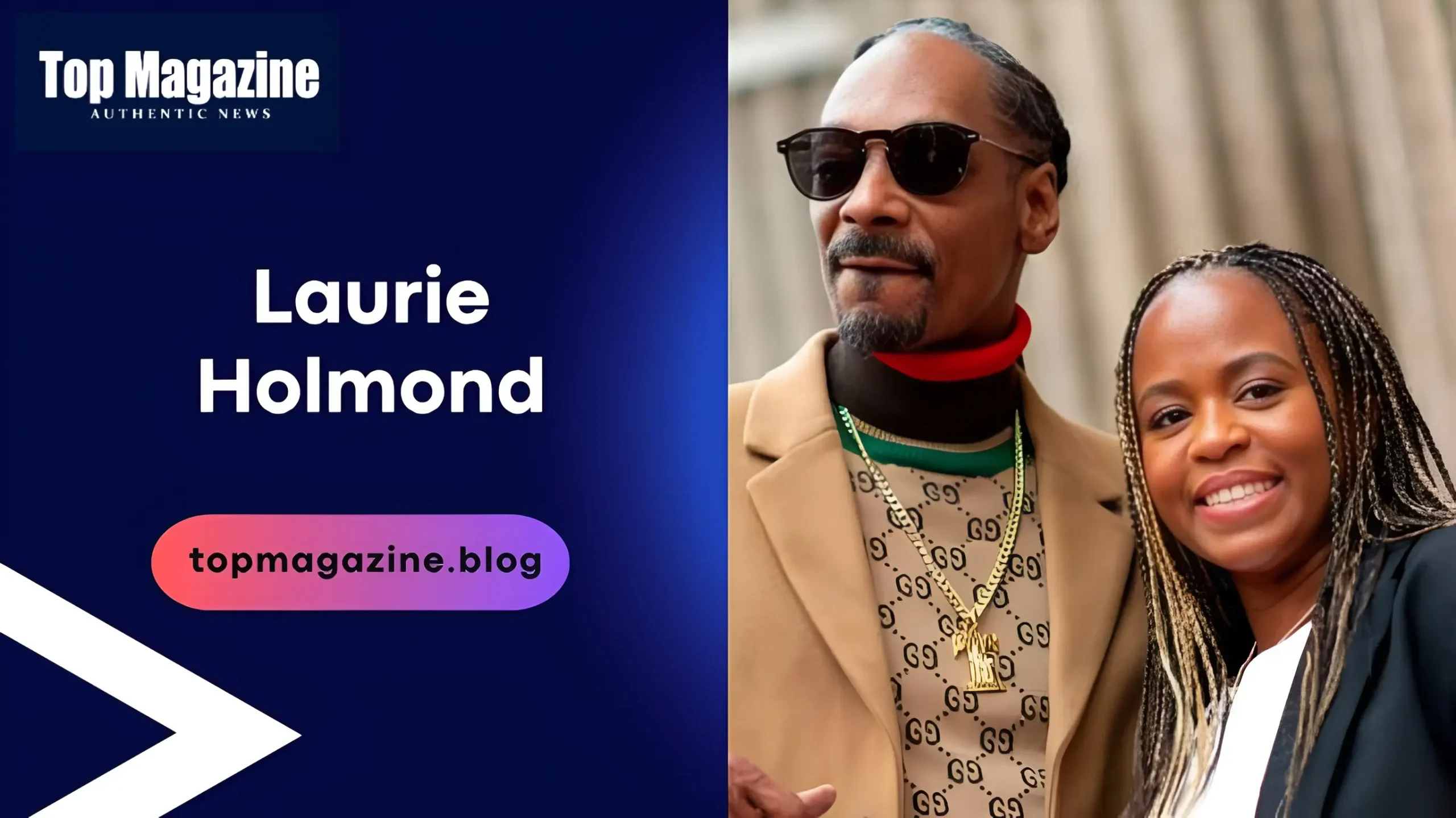
In an era where celebrity culture dominates social media and entertainment headlines, Laurie Holmond represents a refreshing departure from the typical narrative of fame and public spectacle. While many individuals associated with high-profile figures seek to capitalize on their connections and secure their place in the spotlight, Holmond has consistently chosen a path of dignity, privacy, and intentional living. Her story is not one of red carpets and paparazzi, but rather of quiet strength, professional accomplishment, and the profound responsibility of motherhood.
The name Laurie Holmond often surfaces in conversations about entertainment history, yet most people know surprisingly little about the woman behind the headlines. Often misspelled as Laurie Helmond in various online publications, she remains a figure of intrigue precisely because she has refused to become a permanent fixture of celebrity gossip. This deliberate distance from the entertainment industry’s relentless machinery has only deepened public curiosity about who she truly is.
Born in 1973, Laurie Holmond has navigated life with a perspective shaped by personal values rather than external validation. Her journey encompasses meaningful relationships, significant parenting milestones, and professional pursuits that have defined her sense of identity and purpose. Understanding Laurie Holmond means recognizing that lasting impact rarely comes from chasing celebrity—it emerges from living authentically and making choices aligned with one’s core principles.
This comprehensive exploration delves beyond surface-level knowledge to examine what truly defines Laurie Holmond: her character, her choices, and the legacy she continues to build away from the public eye.
The Early Years: Foundations of Character
Laurie Holmond’s formative years in California during the 1970s and 1980s shaped her fundamental approach to life. Growing up in Long Beach, California, she was part of a generation that witnessed significant cultural and social shifts. The Long Beach of her youth was a vibrant, diverse community where different worlds collided and coexisted. This environment exposed young Laurie to multiple perspectives and a realistic understanding that not every person seeks the same definition of success.
Her childhood in California provided something invaluable: the ability to observe ambitious people pursuing their dreams while simultaneously understanding that alternative paths existed. Long Beach’s working-class and middle-class neighborhoods offered daily lessons about resilience, community, and the importance of staying grounded regardless of external circumstances. These early experiences instilled in Holmond a practical wisdom that would serve her throughout her adult life.
The 1980s in California presented opportunities for education and growth. Holmond’s formative educational experiences at Long Beach Polytechnic High School would prove significant not merely for academic reasons, but for the relationships forged within those walls. High school represents a crucial period when young people develop their worldview, establish their values, and make decisions that reverberate throughout their lives. For Laurie Holmond, this period would introduce her to individuals who would feature prominently in her life’s narrative.
What remains evident about her early years is a foundational commitment to authenticity. Even as a young woman navigating the complexities of adolescence and emerging adulthood, Holmond demonstrated the kind of character that refuses to be swayed by trends or temporary pressures. This authentic foundation would prove essential when facing the complexities of adult relationships and the extraordinary circumstances that would eventually define her public narrative.
High School Connections: A Story of Timing and Destiny
Long Beach Polytechnic High School served as the backdrop for what would become one of the most significant relationships of Laurie Holmond’s life. High school sweetheart relationships often fade with time and changing circumstances, yet certain connections possess a quality that transcends the typical teenage romance. For Holmond, her connection with Calvin Broadus Jr.—who would later become known to the world as Snoop Dogg—represented something more substantial: a genuine human connection formed during formative years.
High school sweethearts carry a unique place in relationship history. They represent innocence, shared discovery, and authentic connection before the complications of fame, fortune, or public scrutiny enter the equation. Laurie Holmond and Calvin Broadus Jr. experienced their initial relationship during a period when he was simply a talented young man with big dreams, before platinum records and Hollywood stardom reshaped his existence. This distinction matters profoundly when understanding Holmond’s perspective and her later life choices.
The trajectory of their relationship—connecting as high school sweethearts, experiencing a period of separation, then rekindling their connection in the late 1990s—reflects the complex reality of how lives unfold. People change, pursue different paths, and sometimes find their way back to significant connections. For Laurie Holmond, this rekindled relationship in the late 1990s represented a conscious choice to reconnect with someone from her past, even as his life had transformed dramatically.
This chapter of her life illustrates several important principles about Holmond’s character:
- Authenticity over pretense: She valued genuine connection over the facade of celebrity culture
- Independence in decision-making: She made relationship choices based on personal conviction, not public opinion
- Maturity in perspective: She could acknowledge her past while navigating the complexities of the present
- Emotional intelligence: She understood the significance of meaningful connections regardless of external circumstances
Motherhood and the Birth of Julian: Embracing Responsibility
The birth of Julian Corrie Broadus on June 18, 1998, marked a transformative moment in Laurie Holmond’s life. Motherhood represents humanity’s most profound responsibility—the privilege and burden of shaping another human being’s entry into the world and guiding their early years. For Holmond, this responsibility came with extraordinary circumstances that tested her character and commitment to her child.
Julian’s birth during a period when his father was already married created a complex situation that demanded maturity, emotional intelligence, and unwavering dedication. Rather than allowing circumstances to diminish her commitment to her child, Holmond chose to prioritize Julian’s wellbeing above all considerations. This decision—to be fully present for her son despite the complications surrounding his birth—reveals fundamental truths about her character and values.
The journey toward public recognition of Julian’s paternity was not immediate or simple. In an era before social media’s omniscient reach, such matters took time to navigate and resolve. When formal paternity was established and Snoop Dogg recognized Julian as his son, it represented validation not just for the child, but for the mother who had advocated consistently for her son’s rightful place in his father’s life. Holmond’s persistence in ensuring Julian received appropriate acknowledgment and support demonstrates the protective love that defines committed parenthood.
Key aspects of Holmond’s approach to motherhood:
- Unconditional love: Raising Julian with full commitment regardless of external circumstances
- Advocacy for her child: Ensuring Julian received proper paternity recognition and paternal support
- Privacy protection: Shielding her son from unnecessary public scrutiny while allowing father-son connection
- Emotional stability: Providing consistent, stable presence amid complicated family dynamics
- Values-based parenting: Instilling principles that transcend celebrity culture
Julian’s attendance at his father’s Hollywood Walk of Fame ceremony in 2018 represented a poignant moment—a public acknowledgment of a relationship built on foundation of love and commitment. This appearance demonstrated that Holmond’s dedication to her son’s connection with his father transcended personal considerations. She facilitated this relationship because it served Julian’s interests, even though the public nature of such events inherently drew attention to her own story.
Professional Identity: The Businesswoman Beyond the Headlines
One of the most consistently underreported aspects of Laurie Holmond’s life involves her professional accomplishments and business ventures. While media narratives have focused extensively on her relationship to a famous figure, her own identity as a businesswoman and professional has largely remained in the background. This absence of attention to her professional achievements is itself revealing—it demonstrates how easily public discourse can reduce individuals to their most visible connection rather than acknowledging their complete identity.
Holmond’s career as a businesswoman reflects independence, entrepreneurial spirit, and the determination to build a professional legacy separate from her personal circumstances. In the late 1990s and 2000s, when single motherhood was often viewed through a lens of struggle and limitation, Holmond pursued professional opportunities that allowed her to provide for her son while maintaining autonomy and professional dignity. This commitment to building a career represents a form of strength that rarely receives adequate recognition in popular culture.
Her business endeavors demonstrate several important principles:
Professional Independence: Building a career that provided financial security without relying on public recognition or association with celebrity figures
Entrepreneurial Vision: Identifying opportunities and creating value in markets she understood and believed in
Work-Life Integration: Balancing professional ambitions with the demands and joys of active motherhood
Long-term Thinking: Building sustainable income streams rather than seeking quick financial gains through association with fame
The conscious decision to maintain a career reflects a deeper philosophy: that self-sufficiency and professional accomplishment provide psychological benefits beyond financial security. For Laurie Holmond, maintaining her own professional identity ensured that she remained a complete person with multidimensional value, not merely “the mother of” or “the former partner of” someone famous. This distinction matters profoundly for personal dignity and psychological wellbeing.
The Philosophy of Privacy: Choosing Anonymity in an Age of Exposure
Perhaps Laurie Holmond’s most distinctive choice involves her deliberate maintenance of privacy in an era when almost everyone leverages personal connections for social media prominence and public attention. Her decision to live quietly, away from the entertainment industry’s relentless spotlight, represents a philosophical stance about what constitutes meaningful life and authentic success.
The digital age has fundamentally transformed privacy from an assumed condition to a consciously protected boundary. Celebrities and their associates now face enormous pressure to monetize their visibility through social media, brand endorsements, and reality television appearances. Laurie Holmond’s refusal to participate in this economy of attention demonstrates remarkable conviction in her values. She could have become a media personality, leveraged her connections for Instagram influence, or published memoirs capitalizing on her relationship to Snoop Dogg. Instead, she chose presence over prominence.
This philosophy of privacy offers several important lessons for contemporary society:
The Distinction Between Visibility and Significance: True impact doesn’t require public visibility. Holmond has shaped her son’s life profoundly, supported his wellbeing, and built a professional legacy—all outside public consciousness.
Protection of Emotional Space: Privacy creates psychological boundaries that allow genuine relationships to flourish. By limiting public exposure, Holmond protected her family’s ability to relate to one another without external judgment or unwanted commentary.
Resistance to Commodification: Personal relationships and family bonds possess intrinsic value that becomes diminished when exposed to public consumption. Holmond’s privacy protected what matters most from being reduced to entertainment.
Mental Health and Wellbeing: The relentless scrutiny of public life creates psychological stress that Holmond wisely chose to avoid. Her deliberate distance from celebrity culture likely contributed to emotional stability and resilience.
Modeling Authentic Values: By living according to her convictions rather than societal expectations, Holmond demonstrated to her son the importance of staying true to oneself regardless of external pressure.
Holmond’s approach to privacy wasn’t simply about avoiding attention—it represented an affirmative choice to prioritize psychological wellbeing, authentic relationships, and personal meaning over the temporary validation offered by public recognition. In a culture obsessed with visibility, her invisibility became its own form of strength.
Long-Term Parenting and the Development of Character
The period from Julian’s childhood through adolescence and into adulthood represents the true measure of Laurie Holmond’s effectiveness as a parent. While any individual can play a role in a child’s birth, true parenting involves decades of daily commitment, countless decisions, emotional presence, and consistent modeling of values. For Holmond, this long-term commitment has manifested in raising a son who seems to have inherited his mother’s values: privacy, authenticity, and independence from celebrity culture.
Julian Corrie Broadus’s trajectory offers indirect evidence of the foundation his mother built. A child raised by a committed, values-centered parent in the midst of extraordinary circumstances often develops remarkable resilience and clarity about what truly matters. The fact that Julian has not become a fixture of celebrity culture himself—despite having every opportunity to do so—suggests that his mother’s values were effectively transmitted and internalized.
Core parenting principles evident in Holmond’s approach:
- Consistency through changing circumstances: Maintaining stable presence despite the complications surrounding Julian’s relationship with his father
- Emotional attunement: Understanding her son’s needs and responding with appropriate support
- Modeling behavior: Demonstrating through her own choices the importance of authenticity and privacy
- Encouraging independence: Supporting Julian’s autonomy and his ability to make his own decisions
- Unconditional support: Standing by her son regardless of his choices or life direction
Long-term parenting success cannot be measured in immediate outcomes or public recognition. Instead, it emerges over decades as a child develops into a functional, emotionally healthy adult capable of navigating relationships, making sound decisions, and building meaningful lives. The evidence suggests that Laurie Holmond’s parenting has succeeded on these deeper, more meaningful measures.
Navigating Complexity: Maintaining Dignity in Complicated Situations
Life rarely unfolds according to plan, and few people face circumstances that test their character as thoroughly as those confronting Laurie Holmond. The situation of bearing and raising a child outside marriage, while the child’s father was married to another woman, created a scenario rife with potential for bitterness, resentment, and emotional damage. Yet Holmond navigated these complications with remarkable grace and dignity.
Her ability to maintain a positive relationship between Julian and his father—despite the circumstances of Julian’s birth—demonstrates emotional maturity and prioritization of her son’s wellbeing above personal grievances. Many individuals in similar situations have allowed anger or hurt to poison relationships, ultimately damaging their children’s psychological wellbeing. Holmond instead chose to facilitate connection, recognizing that her son benefited from having a relationship with his father.
This navigating of complexity reveals several dimensions of character:
Emotional Resilience: The capacity to feel hurt or disappointment without allowing those emotions to corrupt one’s actions
Selflessness: Prioritizing her son’s interests and wellbeing above her own desires for public vindication or attention
Wisdom: Understanding that holding onto resentment would ultimately hurt the person she loved most
Psychological Flexibility: Adapting to circumstances that she didn’t choose, and making the best of complex situations
Integrity: Acting according to her values even when doing so received no public recognition or reward
The Broader Legacy: Impact Beyond the Personal
While Laurie Holmond’s primary legacy involves her son and the life they’ve built together, her choices carry broader implications for how we understand success, motherhood, and authentic living in contemporary culture. Her quiet example has relevance far beyond her personal circumstances.
In a society that increasingly measures success through visibility and public recognition, Holmond represents an alternative model: success defined by internal satisfaction, strong relationships, and alignment with personal values. She demonstrates that a life well-lived doesn’t require fame or public attention. Instead, lasting fulfillment emerges from dedicating oneself to what matters most—in her case, her son’s wellbeing and her own professional and personal integrity.
For women specifically, Holmond offers a compelling counternarrative to the often-demanding expectations of celebrity culture. She shows that single mothers need not bear shame or accept diminished status. She demonstrates that women can build professional lives, raise healthy children, and maintain psychological wellbeing while living outside the spotlight. Her example provides quiet permission for other women to define success on their own terms rather than accepting cultural prescriptions.
Case Studies: Real-World Applications of Holmond’s Principles
Case Study 1: Privacy as Professional Strategy
Similar to Laurie Holmond’s approach, many successful professionals in entertainment and business have discovered that maintaining personal privacy while pursuing professional goals creates better long-term outcomes. Executives, producers, and other industry professionals who have limited public profiles often report greater psychological wellbeing than their highly visible counterparts. The principle Holmond embodied—that you can be professionally successful without being publicly prominent—has proven true across industries and contexts.
Case Study 2: Co-Parenting Success Across Relationship Boundaries
Holmond’s ability to facilitate a positive relationship between Julian and Snoop Dogg, despite the unconventional nature of their family structure, aligns with research on effective co-parenting. Mental health professionals increasingly recognize that children benefit most when parents can maintain civility and support one another’s relationships with their children, regardless of the romantic relationship’s status. Holmond’s example demonstrates this principle in practice.
Case Study 3: Professional Identity Beyond Relationship Status
Women who have built careers independent of their relationships—whether romantic or familial—consistently report greater psychological resilience and life satisfaction. Holmond’s commitment to maintaining her own business ventures and professional identity served as a buffer against the complications of her personal circumstances. This principle applies broadly to individuals seeking emotional stability in complicated situations.
Understanding the Distinction: Laurie Holmond vs. Common Misspellings
A curious aspect of Laurie Holmond’s public presence involves the persistent misspelling of her surname as “Laurie Helmond” across various websites and publications. This spelling variation has created minor confusion in online searches and contributed to the fragmented nature of information about her. The correct spelling—Holmond—remains less common online than the incorrect variant, a phenomenon that likely reflects copying errors across various publications.
This distinction, while seemingly minor, illustrates how information becomes distorted as it passes through multiple sources. For anyone seeking accurate information about Laurie Holmond, using the correct spelling ensures access to the most relevant and authoritative content. It also serves as a reminder that information published online requires verification against reliable sources.
FAQ Section: Common Questions About Laurie Holmond
Q: Who is Laurie Holmond?
A: Laurie Holmond is best known as the former partner of American rapper Snoop Dogg and the mother of his youngest son, Julian Corrie Broadus. Born in 1973, she is a businesswoman who has consciously maintained a private life away from the entertainment industry spotlight.
Q: How did Laurie Holmond and Snoop Dogg meet?
A: Laurie Holmond and Snoop Dogg (Calvin Broadus Jr.) were high school sweethearts who attended Long Beach Polytechnic High School together in California. They rekindled their relationship in the late 1990s after a period of separation.
Q: When was Julian Corrie Broadus born?
A: Julian Corrie Broadus was born on June 18, 1998. He is Snoop Dogg’s third son and his only child born outside of his marriage to Shante Broadus.
Q: How many children does Laurie Holmond have?
A: Laurie Holmond has one son, Julian Corrie Broadus, born in 1998.
Q: Is Laurie Holmond still with Snoop Dogg?
A: No, Laurie Holmond and Snoop Dogg are not in a relationship. They parted ways after Julian’s birth, though Snoop Dogg has maintained an active role in their son’s life.
Q: What does Laurie Holmond do for work?
A: Laurie Holmond is a businesswoman who has pursued professional ventures away from the public eye. She has chosen to build her career independently while raising her son.
Q: Why does Laurie Holmond maintain such privacy?
A: Holmond has consciously chosen to protect her personal and family life from public scrutiny. This approach allows her to maintain authentic relationships and psychological wellbeing without the complications that come with celebrity culture.
Q: Has Laurie Holmond appeared in the media or given interviews?
A: Laurie Holmond has largely avoided media appearances and public interviews, preferring to maintain her private lifestyle. This consistent boundary has defined her public persona as someone who values privacy.
Q: How is Laurie Holmond’s name commonly misspelled?
A: Laurie Holmond’s surname is frequently misspelled as “Helmond” online. The correct spelling is “Holmond,” which helps ensure accurate information when searching for her.
Q: What is known about Julian’s relationship with his father?
A: After paternity was formally established, Snoop Dogg recognized Julian as his son and took responsibility for his upbringing. Julian has maintained a relationship with his father, including public appearances such as attending Snoop Dogg’s Hollywood Walk of Fame ceremony in 2018.
Q: Is there any public information about Laurie Holmond’s business ventures?
A: Specific details about Holmond’s business ventures remain private, reflecting her overall commitment to maintaining separation between her professional and personal life and public consciousness.
Q: What can we learn from Laurie Holmond’s approach to life?
A: Holmond’s life offers lessons about authenticity, the possibility of building meaningful success without public recognition, the importance of privacy in psychological wellbeing, and the strength required to raise a child with dignity and love regardless of circumstance.
Q: Does Laurie Holmond have a social media presence?
A: Laurie Holmond has deliberately avoided building a significant social media presence, maintaining her commitment to privacy and separation from celebrity culture.
Q: How does Laurie Holmond’s approach differ from typical celebrity-adjacent figures?
A: Unlike many individuals connected to famous people, Holmond has refused to monetize her connection or build a public identity around it. She has instead focused on her own professional work and her son’s wellbeing.
Conclusion: The Strength of Living Authentically
Laurie Holmond’s life represents something increasingly rare in contemporary culture: a deliberate choice to live authentically rather than perform for public consumption. Her journey from high school sweetheart to single mother to businesswoman to woman committed to privacy offers a compelling narrative about what it means to build a life according to one’s own values rather than external expectations.
In a society obsessed with visibility, Holmond’s invisibility becomes striking precisely because it is chosen. She could have leveraged her connection to Snoop Dogg for prominence; instead, she leveraged her independence and business acumen for authenticity. She could have allowed bitterness about her circumstances to poison her relationships; instead, she prioritized her son’s wellbeing and facilitated his connection with his father.
The measure of a well-lived life rarely appears on social media feeds or celebrity gossip columns. It emerges instead in the quality of relationships maintained over decades, the character transmitted to the next generation, the professional accomplishments achieved through steady dedication, and the psychological wellbeing that comes from alignment between values and actions. By these measures, Laurie Holmond’s life stands as a quiet example of success earned through integrity, maintained through commitment, and protected through wisdom.
As we continue navigating a cultural landscape increasingly dominated by the pressure to be seen and known, Laurie Holmond reminds us that the most meaningful lives are often lived in the spaces between public moments—in the conversations with our children, the work we do when no one is watching, and the values we maintain when staying true to them would be easier than compromising. Her story, though largely untold in mainstream media, carries profound lessons about what truly matters in life and how authentic success is built.
For More Visits: Top Magazine
Also Read: Nicolo Robert Tucci: Rising Creative Leader
