

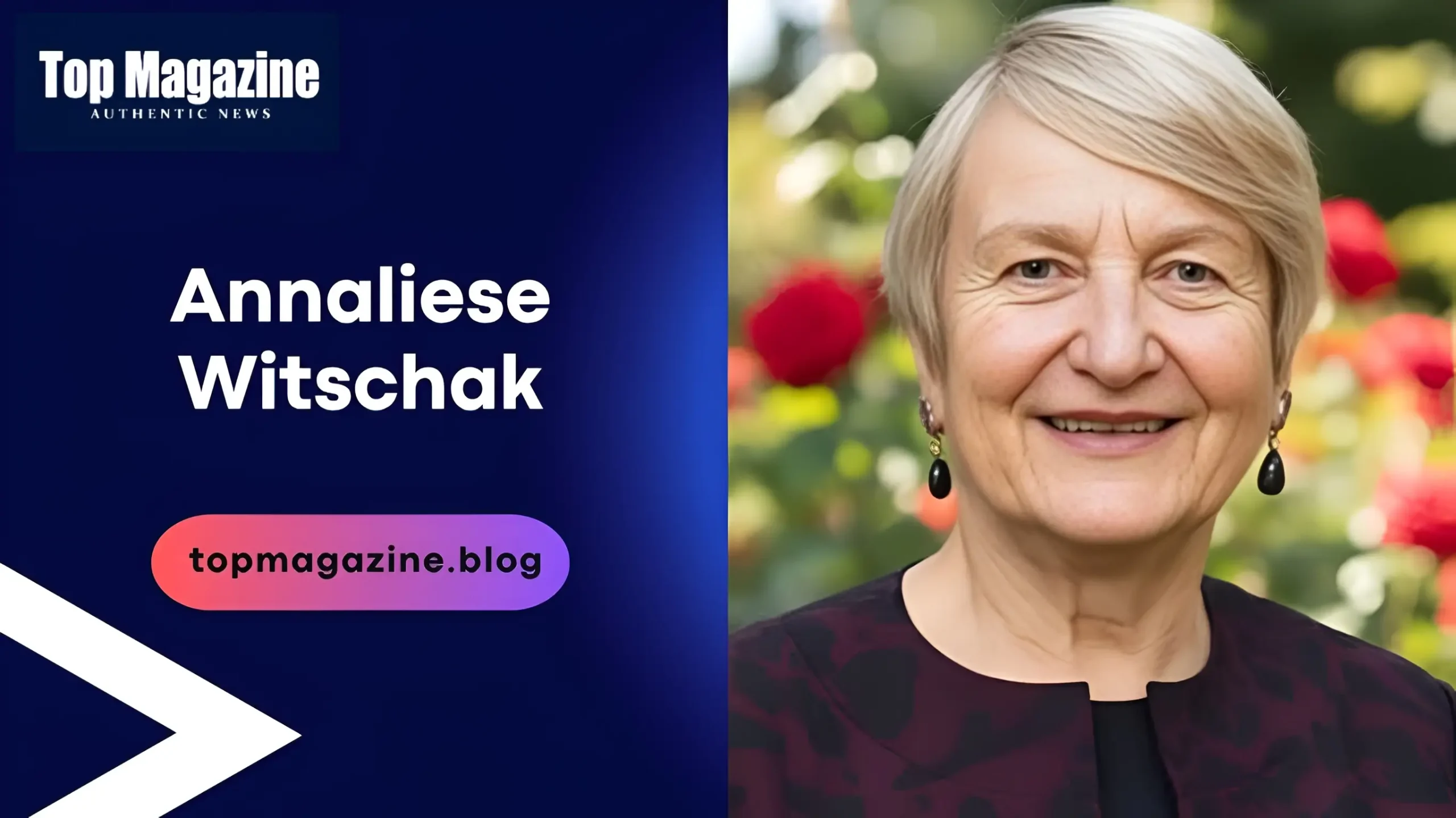
When discussing remarkable women who have shaped modern history through quiet strength and unwavering commitment to family, Annaliese Witschak stands as a compelling figure whose story deserves recognition far beyond the headlines that often define her. While many know Annaliese Witschak primarily as the first wife of renowned billionaire George Soros, her life represents something far more profound—a narrative of extraordinary resilience, personal fortitude, and the profound influence a single individual can have on shaping the next generation of philanthropists and thought leaders.
Born in 1934 in Germany, Annaliese Witschak lived throu gh one of humanity’s darkest periods. Her journey from wartime orphan to becoming the mother of three exceptionally accomplished individuals speaks volumes about her character, values, and the foundations she established for her children’s success. Today, at over ninety years old, Annaliese Witschak remains a testament to the power of perseverance and the lasting impact of maternal influence on generational change.
This comprehensive exploration of Annaliese Witschak’s life goes beyond basic biographical facts. We examine how her early experiences shaped her worldview, the nature of her marriage to one of the world’s most influential investors, and most importantly, how her parenting philosophy produced offspring who have dedicated their lives to addressing global challenges through philanthropy and social entrepreneurship.
Early Life: Surviving the Shadows of War
Annaliese Witschak’s beginning holds the kind of weight that shapes an entire personality. Born on January 3, 1934, in Germany, she entered the world just as dark clouds gathered over Europe. The girl who would become Annaliese Witschak faced circumstances that would have broken many spirits. Unlike children born into stability and security, her early years were marked by the unprecedented chaos of World War II.
As an orphan during the war years, Annaliese Witschak experienced losses that most modern readers can scarcely comprehend. The separation from family, the displacement, and the uncertainty of survival during wartime created in her a particular kind of strength—not the aggressive, visible kind often celebrated in popular culture, but rather the quiet, enduring resilience that allows someone to pick up pieces and rebuild life entirely.
This foundational period of her life established patterns that would define Annaliese Witschak’s entire approach to existence. She learned early that stability is not guaranteed, that family bonds transcend blood in certain circumstances, and that adaptation is not merely a survival skill but a pathway to genuine transformation. When she eventually made her way to the United States as a German immigrant, Annaliese Witschak brought with her not bitterness about her circumstances, but rather a profound appreciation for opportunity and a determination to build something meaningful.
The psychological impact of these formative years cannot be understated. Research on resilience and adversity demonstrates that individuals who survive significant childhood trauma often develop exceptional emotional intelligence and capacity for empathy. Annaliese Witschak’s later parenting approach, which emphasized values over material accumulation and purpose over prestige, appears directly connected to her understanding of what truly matters in human life.
Meeting George Soros: A Convergence of Destinies
The story of how Annaliese Witschak met George Soros is less documented than one might expect, yet it represents a pivotal moment in both their lives. When they married in 1960, George Soros was not yet the titan of finance he would become. He was a young man with ambition, intellectual prowess, and philosophical depth—qualities that appealed to Annaliese Witschak’s own contemplative nature.
What makes their union particularly interesting is that Annaliese Witschak, a German immigrant of modest means, entered into marriage with a Hungarian-Jewish refugee. Both carried the weight of displacement and the experience of emerging from environments marked by conflict and uncertainty. This shared understanding of life’s precariousness likely created a deeper bond than simple attraction might explain.
During the early years of their marriage, from 1960 onwards, George Soros was building the foundations of his financial career. Annaliese Witschak became not just his wife but, in many respects, the anchor that grounded his ambitions within a family structure. While George Soros pursued increasingly complex financial strategies and investments, Annaliese Witschak focused on the dimensions of life that money cannot purchase—creating a home environment, nurturing her children’s intellectual and emotional development, and instilling in them values that transcended material success.
The contrast between George Soros’s public world of high finance and Annaliese Witschak’s private world of family cultivation created an interesting dynamic. She was the custodian of domestic life while he commanded international markets. Yet their partnership, which lasted until their divorce in 1983, produced three children who would each make their own significant marks on the world.
The Three Accomplished Children: Annaliese Witschak’s Greatest Legacy
Perhaps the most enduring testament to Annaliese Witschak’s influence lies in the accomplishments of her three children. Far from simply inheriting wealth and coasting on family privilege, each child developed a distinct identity and pursued meaningful work aligned with their personal values—a pattern that speaks directly to their mother’s parenting philosophy.
Jonathan Tivadar Soros: Investing in Democracy
Jonathan Tivadar Soros, born in 1970, represents the first of Annaliese Witschak’s children to carve out a significant public presence. Following in certain respects the footsteps of his father, Jonathan developed expertise in investment and finance. However, his approach diverged substantially from pure profit maximization. In 2012, Jonathan Tivadar Soros co-founded Friend of Democracy, a super PAC dedicated to reducing the influence of money in American politics.
This venture reveals something important about how Annaliese Witschak instilled values in her children. Despite having access to unlimited funds and the option to pursue purely personal enrichment, Jonathan chose instead to deploy his financial knowledge toward addressing systemic problems in democratic governance. The dedication to purpose over profit appears as a direct inheritance from his mother’s worldview—a view shaped by living through periods when democracy itself was under existential threat.
Alexander Soros: Continuing the Philanthropic Tradition
Alexander Soros, while maintaining a lower public profile than his sister Andrea, has also engaged in significant philanthropic work. Following the family tradition established by both his parents’ later years and his mother Annaliese Witschak’s values, Alexander has focused on supporting causes related to global development and human rights. His work demonstrates continuity with the philosophical commitments that Annaliese Witschak emphasized during his formative years.
Andrea Soros Colombel: Building Institutional Change
Andrea Soros Colombel, born in 1965, has emerged as perhaps the most publicly active of Annaliese Witschak’s children in terms of documented philanthropic impact. Her trajectory provides a remarkable case study in how parental values translate into generational influence.
In 1993, Andrea founded the Trace Foundation with a specific mission: supporting the continuity, development, and vitality of Tibetan communities, with particular emphasis on those within China. This decision emerged from Andrea’s personal journey and interests, yet the underlying commitment to preserving cultural heritage while promoting sustainable development reflects principles that Annaliese Witschak emphasized during Andrea’s childhood.
Key Areas of Andrea’s Impact Through Trace Foundation:
- Education and Vocational Training: Recognizing that long-term development requires educational infrastructure, Trace Foundation invested substantially in educational programs across the Tibetan plateau. From language preservation to modern skill development, the foundation took a comprehensive approach to human capital development.
- Cultural Preservation: Andrea understood that development without cultural continuity creates a hollow form of progress. Trace Foundation worked to ensure that modernization efforts did not come at the expense of Tibetan language, traditions, and cultural practices.
- Community-Led Development: Rather than imposing external solutions, Trace Foundation operated on the principle that communities themselves must lead the agenda for their own development. This approach—emphasizing agency and self-determination—reflects a deep respect for human dignity that Annaliese Witschak demonstrated throughout her life.
- Environmental Sustainability: Working on the Tibetan plateau, where glacial melt and grassland degradation present urgent challenges, Trace Foundation integrated environmental sustainability into all development initiatives.
From 1993 through 2018, when Trace Foundation wound down its operations, Andrea’s work touched thousands of lives across the Tibetan plateau. The foundation opened the Latse Contemporary Tibetan Cultural Library in New York City, creating a permanent institution devoted to preserving and promoting Tibetan culture in the Western world. Additionally, Andrea co-founded the Tsadra Foundation in 2000 to support advanced students of Tibetan Buddhism and preserve Buddhist intellectual traditions.
Beyond these organizations, Andrea serves on the board of the Open Society Foundations, carries forward her commitment through Acumen (a nonprofit investment fund tackling global poverty), and contributes to numerous other causes related to social justice, environmental sustainability, and economic development.
Case Study: How Parental Values Shaped Andrea’s Philanthropic Vision
The connection between Annaliese Witschak’s life experience and Andrea Soros Colombel’s philanthropic choices illuminates a crucial principle: parents do not necessarily determine their children’s specific causes, but they do establish the underlying framework of values through which children approach their work.
Annaliese Witschak, having experienced displacement and cultural disruption during wartime, understood viscerally what it means to have your way of life threatened. She recognized the fragility of cultural continuity. When Andrea encountered Tibetan culture and became passionate about its preservation, she was drawing on maternal lessons about the importance of cultural identity and community bonds. When Andrea insisted that Trace Foundation operate according to principles of local leadership and sustainable development, she was practicing the respect for human agency that her mother modeled throughout her life.
This is not to say that Annaliese Witschak sat down and explicitly instructed her daughter to found a foundation supporting Tibetan communities. Rather, she established a moral and philosophical framework within which Andrea’s individual passions and interests could flourish. The result is a life of extraordinary impact—one shaped partially by Annaliese Witschak’s example, though expressed entirely through Andrea’s unique vision and commitment.
Marriage, Divorce, and the Private Years
The dissolution of Annaliese Witschak’s marriage to George Soros in 1983 marked another significant transition in her life. After twenty-three years together, the couple divorced without the public rancor that often characterizes high-profile separations. The privacy surrounding their separation reflects both their personal dignity and Annaliese Witschak’s commitment to protecting her children from unnecessary scrutiny.
What followed the divorce period illustrates a crucial aspect of Annaliese Witschak’s character: her ability to define herself independently of her relationship to a famous husband. While many individuals married to prominent figures struggle with identity after separation, Annaliese Witschak chose a different path entirely. She embraced privacy and stepped back from public life with intentionality and grace.
This choice deserves recognition as a form of wisdom. In an age increasingly characterized by the commodification of personal life and the expectation that anyone remotely connected to fame should monetize their association, Annaliese Witschak refused that template. She could have written memoirs, given interviews, or leveraged her connection to George Soros for speaking engagements and media appearances. Instead, she chose the quieter path of private life.
The Philosophy Behind Annaliese Witschak’s Privacy
Annaliese Witschak’s decision to maintain privacy after her divorce represents a form of strength often undervalued in contemporary culture. Her approach suggests several important principles:
- Boundaries as Self-Care: Maintaining clear boundaries between public curiosity and private life constitutes an act of self-protection and dignity. Annaliese Witschak understood that not everything requires public validation or consumption.
- Protection of Children’s Development: By withdrawing from the public sphere, Annaliese Witschak protected her adult children’s freedom to develop their own public personas (or lack thereof) without their mother’s story constantly intersecting with theirs.
- Authenticity Over Performance: Privacy allowed Annaliese Witschak to live authentically rather than performing a version of herself for public consumption. This commitment to authenticity represents an important counterpoint to contemporary culture’s emphasis on constant self-presentation.
- Legacy Through Action Rather Than Narration: Rather than telling her story publicly, Annaliese Witschak’s legacy speaks through her children’s accomplishments and through the values they embody. This form of indirect influence often carries more weight than direct self-promotion.
Motherhood: The Central Achievement
While Annaliese Witschak’s life includes marriage to one of the world’s most powerful investors and residence in circles of extraordinary wealth, her central achievement—the one that defined her sense of purpose and fulfillment—was motherhood. During the period when George Soros was building his investment empire and establishing the financial foundations for later philanthropic work, Annaliese Witschak was building something equally important: the emotional and intellectual foundations of three individuals who would later contribute significantly to the world.
The task of raising children carries different weight and urgency than the accumulation of financial capital. While markets fluctuate and investments change in value, the character traits, values, and emotional capacities instilled during childhood have effects that ripple across decades. In this domain, Annaliese Witschak’s work proved enormously fruitful.
What we can infer about Annaliese Witschak’s parenting approach from the outcomes—three children who chose meaningful work over pure wealth accumulation, who demonstrated commitment to social justice and environmental sustainability, who maintained relatively grounded perspectives despite access to unlimited resources—suggests a mother who:
- Emphasized values over material accumulation
- Encouraged independent thinking rather than blind deference to authority or tradition
- Modeled commitment to principle even when paths diverged from conventional expectations
- Demonstrated that true fulfillment comes from contribution to something beyond oneself
The Lasting Impact of Resilience
As Annaliese Witschak entered her later years—now in her early nineties—her life story gains perspective that only time provides. She has lived through a century marked by unprecedented change: from the devastation of World War II through the Cold War, the information revolution, the internet age, and into an era of global interconnection and new challenges.
Her personal journey from wartime orphan to influential figure in one of the world’s most significant families, and then to someone who deliberately stepped back from that spotlight, offers lessons that extend beyond biographical interest. Her life demonstrates that influence is not measured solely by public prominence. The fact that relatively few people can name Annaliese Witschak compared to George Soros does not diminish her impact—it actually highlights an important truth about how change often occurs through channels less visible than headlines.
The resilience Annaliese Witschak demonstrated in surviving wartime displacement and loss provided the psychological foundation for everything that followed. She learned that circumstances change, that security must be built internally rather than externally, and that human connections matter more than material comfort. These lessons, internalized during her youth, informed her later choices and the values she transmitted to her children.
Conclusion: A Life of Quiet Influence
Annaliese Witschak’s story cannot be adequately summarized as simply being “George Soros’s first wife,” though that connection defined a significant chapter of her life. Rather, her life represents a more complex narrative about resilience, purpose, motherhood, and the ways that individual choices ripple across generations.
From orphaned child in wartime Germany to architect of a family culture emphasizing service and social responsibility, Annaliese Witschak carved out a life of meaning and impact. The most telling evidence of her influence is not found in articles about her directly, but rather in the documented accomplishments of her children and their demonstrated commitment to using their resources and talents for purposes larger than personal enrichment.
In an age that often conflates visibility with significance and prominence with impact, Annaliese Witschak’s life offers a counterweight. Her greatest achievements occurred in spaces invisible to cameras and press: in conversations with her children, in the daily modeling of values, in the creation of a family culture that prioritized principle over prestige.
Frequently Asked Questions About Annaliese Witschak
Who is Annaliese Witschak?
Annaliese Witschak is a German-American woman born on January 3, 1934, best known as the first wife of billionaire investor and philanthropist George Soros. She was married to Soros from 1960 to 1983 and is the mother of three accomplished individuals who have made significant contributions to philanthropy and social enterprise. Beyond this biographical connection, Annaliese Witschak is notable for her remarkable resilience as a wartime orphan and her influential role in shaping her children’s values and commitment to meaningful work.
What was Annaliese Witschak’s background?
Annaliese Witschak was born in Germany in 1934 and experienced the profound challenges of being an orphan during World War II. As a German immigrant who relocated to the United States, she brought with her not only the scars of war but also an understanding of displacement, cultural identity, and the precariousness of human circumstance. These early experiences profoundly shaped her philosophy of life and parenting.
How long was Annaliese Witschak married to George Soros?
Annaliese Witschak and George Soros were married for twenty-three years, from 1960 to 1983. During this period, they had three children together. The couple maintained relative privacy regarding the reasons for their divorce, choosing to handle the matter with dignity and discretion rather than engaging in public disputes.
Who are Annaliese Witschak’s children?
Annaliese Witschak had three children with George Soros:
- Andrea Soros Colombel (born 1965), founder and president of Trace Foundation, dedicated to supporting Tibetan communities; co-founder of Tsadra Foundation; board member of Open Society Foundations and Acumen.
- Jonathan Tivadar Soros (born 1970), hedge fund manager and political donor who co-founded Friend of Democracy, a super PAC focused on reducing money’s influence in politics.
- Alexander Soros, who has engaged in significant philanthropic work related to global development and human rights causes.
What is known about Annaliese Witschak’s parenting philosophy?
While Annaliese Witschak has remained largely private about her approaches to child-rearing, her children’s life choices and values provide evidence of her parenting influence. They demonstrate commitment to purpose-driven work, social responsibility, cultural preservation, and the application of resources toward addressing systemic problems. Her children’s choices to pursue meaningful work over pure wealth accumulation suggest a mother who emphasized values and principle over material accumulation.
Where does Annaliese Witschak live today?
Annaliese Witschak has maintained a private life since her divorce from George Soros in 1983. She deliberately withdrew from public prominence and has continued to prioritize privacy throughout her later years. Specific details about her current residence or daily activities remain undisclosed, consistent with her consistent choice to remain outside the public spotlight.
What is Annaliese Witschak’s relationship to the Open Society Foundations?
While George Soros founded and continues to lead the Open Society Foundations, which has become one of the world’s largest philanthropic organizations, Annaliese Witschak’s direct role in the organization’s work is not extensively documented. However, her influence on her children—particularly Andrea Soros Colombel, who serves on the foundations’ global board—represents an indirect but significant connection to the organization’s mission.
How has Annaliese Witschak influenced her children’s philanthropic work?
Annaliese Witschak’s influence on her children’s philanthropic commitments appears to stem from the values she modeled and instilled during their formative years. Her wartime experiences and understanding of cultural displacement likely informed her children’s later focus on cultural preservation, human rights, and sustainable development. Each child has chosen to deploy their inheritance in service of causes addressing systemic problems rather than pursuing purely personal enrichment.
What lessons can be drawn from Annaliese Witschak’s life?
Annaliese Witschak’s life offers several important lessons: First, that resilience in the face of early trauma can shape a lifetime of meaning-making and contribution. Second, that influence is not measured by public prominence alone; quiet, private influence on one’s children can have ripple effects across generations. Third, that choosing privacy and boundary-setting represents a form of strength in an age increasingly demanding constant public performance. Finally, that the greatest legacy a parent can leave is not material wealth but rather the values and character they instill in their children.
Why is Annaliese Witschak important to understand today?
In contemporary society characterized by celebrity culture and the valorization of public prominence, Annaliese Witschak represents an alternative model of significance. Her story demonstrates that meaning comes through various channels: through surviving adversity with dignity, through raising children who contribute to the world, through maintaining integrity and boundaries, and through stepping back from spotlight while allowing one’s influence to continue working through others. Understanding her life provides perspective on what truly constitutes a life well-lived.
How has Annaliese Witschak’s legacy evolved?
Annaliese Witschak’s legacy continues to evolve primarily through her children’s work and the causes they champion. The Trace Foundation’s decades of work supporting Tibetan communities, Friend of Democracy’s efforts to reform political financing, and ongoing philanthropic work addressing global challenges all represent extensions of values that Annaliese Witschak cultivated. As her children’s contributions accumulate, the full measure of her influence becomes increasingly apparent.
Final Thoughts
The life of Annaliese Witschak defies simple categorization. She is neither merely “the first wife of George Soros” nor simply a private figure of historical interest. Instead, her existence represents a profound meditation on resilience, purpose, and the ways that individual choices—especially the choices we make regarding our children—create effects that extend far beyond our lifetimes.
In an era when legacy is increasingly understood through wealth and power, Annaliese Witschak offers a different model. Her true legacy is measured not in dollar amounts but in the character and commitments of her children, in the lives touched by their work, and in the enduring proof that quiet influence, exercised with integrity and purpose, can reshape the world as profoundly as any public achievement.
For those seeking to understand how to live meaningfully, how to survive adversity with grace, or how to raise children who contribute to solving the world’s problems, the life of Annaliese Witschak provides both inspiration and practical wisdom. Her story reminds us that some of the most important work happens in spaces away from cameras and headlines, and that the best measure of a life well-lived is not the fame one achieves but the positive impact one creates through one’s choices and relationships.
For More Visits: Top Magazine
