

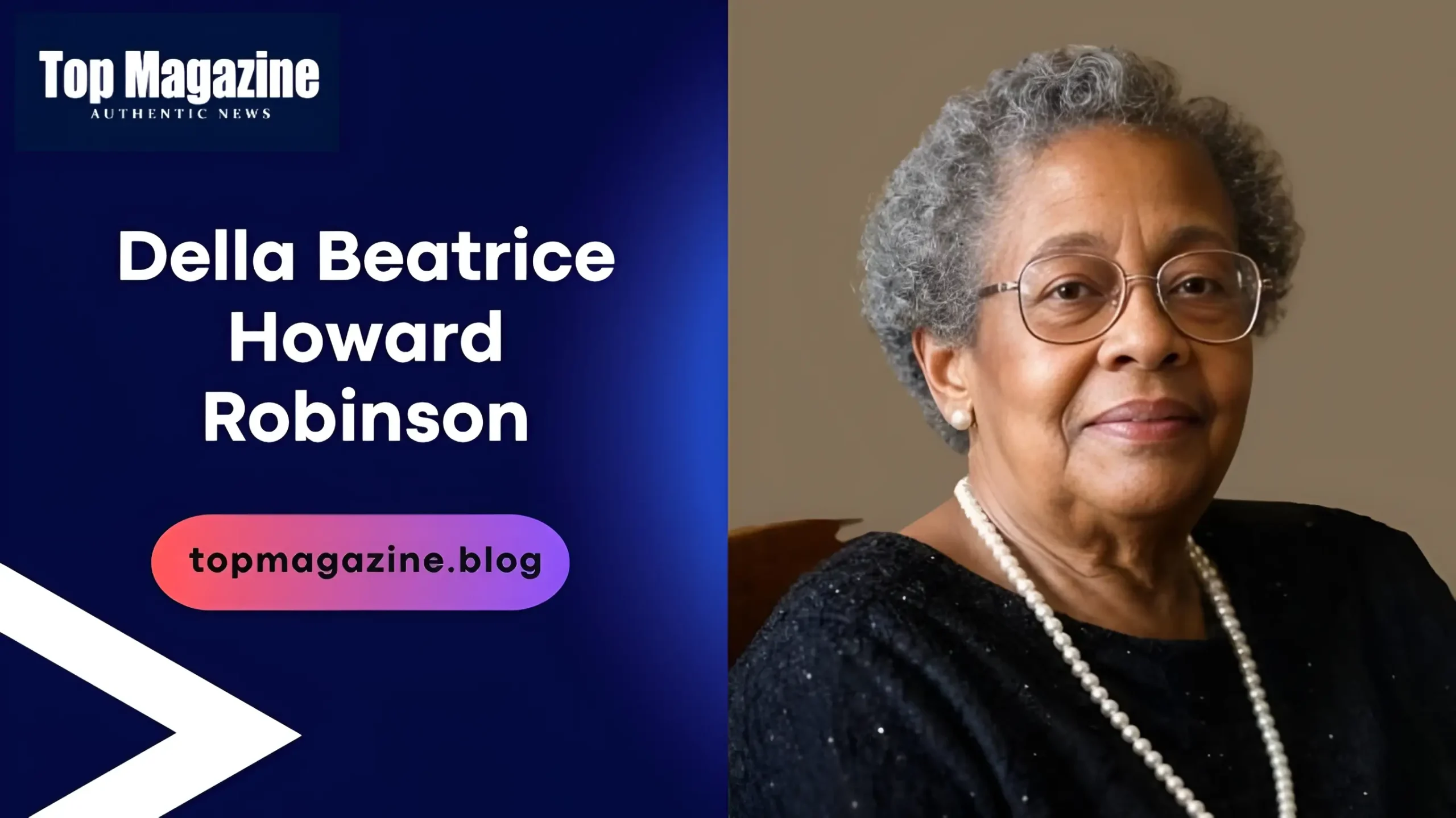
When people think of Ray Charles, they envision a musical genius whose innovations transformed American popular music forever. Yet behind this legendary figure stood a woman whose own remarkable journey has been overshadowed by her association with one of music’s greatest icons. Della Beatrice Howard Robinson deserves recognition not merely as a supporting character in someone else’s story, but as a multidimensional individual whose life embodied the strength, resilience, and quiet dignity characteristic of her generation. Her narrative encompasses far more than her marriage to Ray Charles—it is a testament to artistic passion, personal sacrifice, and the often-unsung contributions of women who helped shape the cultural landscape of twentieth-century America.
Understanding Della Beatrice Howard Robinson requires moving beyond surface-level biographical summaries to explore the complexities of her early years, her independent musical career, her significant relationship with one of America’s most influential musicians, and the remarkably private life she built after their separation. This comprehensive examination reveals a woman of depth, principle, and unwavering strength who navigated the considerable challenges of her era with grace and determination.
The Early Years: Foundation in Faith and Hardship
Born in 1929 in Los Angeles, California, Della Beatrice Howard Robinson entered the world during a period of profound social upheaval. The circumstances of her birth established patterns that would characterize much of her early existence. Her parents, who never married, separated shortly after her arrival, leaving young Della in the care of her mother. Her father’s subsequent marriage to another woman represented the formal dissolution of any paternal presence, a reality that her mother and grandmother worked tirelessly to compensate for through their devotion and sacrifice.
The household that raised Della Beatrice Howard Robinson was characterized by financial constraints typical of African-American families during the 1930s and 1940s. The Great Depression had devastated employment opportunities across the nation, and racial segregation ensured that opportunities for Black families were even more severely limited than for their white counterparts. Despite these material challenges, Della’s family environment was rich in spiritual and emotional nourishment. Her mother and grandmother maintained a home anchored in Christian values, where faith was not merely a Sunday observance but a daily practice that permeated every aspect of family life.
Della Beatrice Howard Robinson’s early childhood was spent in the southern reaches of Texas, where her family had relocated. The landscape of Richmond and Houston during the 1930s presented a young girl with daily confrontations with segregation’s harsh realities. Yet it was in this same environment, within the church buildings that served as refuges for Black communities, that Della discovered her voice—both literally and metaphorically.
Key Formative Influences During Childhood
- Religious foundation: Church was not peripheral to Della’s upbringing; it was central, shaping her worldview and values
- Community resilience: Observing how her community survived systemic oppression instilled in her an understanding of collective strength
- Musical exposure: Gospel music, which dominated church services and community gatherings, became the soundtrack to her early years
- Maternal guidance: Her mother’s quiet strength and grandmother’s wisdom provided models of female resilience and dignity
- Economic hardship: Rather than defeating her family, limited resources became a source of resourcefulness and determination
These elements coalesced to create in Della Beatrice Howard Robinson a person of remarkable inner fortitude, someone who understood both vulnerability and strength, limitation and possibility.
The Gospel Singer: A Career Built on Faith and Authentic Expression
As Della Beatrice Howard Robinson entered her teenage years, her musical talent became increasingly apparent to those around her. Unlike many young people who might have pursued music as a path to fame or financial security, Della’s relationship with music was rooted in something more fundamental: the desire to give voice to human emotion and spiritual truth.
During her adolescence, Della Beatrice Howard Robinson joined Cecil Shaw’s church choir, an ensemble that would prove instrumental in her musical development. This was not a casual participation but a serious engagement with the craft of singing. The choir members, carefully selected for their vocal abilities, received training and performed regularly in various venues. For Della, the choir represented far more than a musical organization—it was a community of artists committed to using their talents for a purpose transcending commercial success.
The power of Della Beatrice Howard Robinson’s voice was not merely technical proficiency, though she possessed that. Rather, her vocal abilities were inseparable from her capacity to convey authentic emotion. When she sang, listeners experienced not a display of vocal acrobatics but rather an honest transmission of feeling. Gospel music, with its emphasis on spiritual depth and emotional authenticity, provided the perfect vehicle for her artistic gifts.
Della Beatrice Howard Robinson’s Musical Career Highlights
The trajectory of Della Beatrice Howard Robinson’s professional music career, while shorter than it might have been, was nonetheless substantial:
- Church choir performances: Regular performances at services and special events established her reputation within gospel circles
- Radio broadcasts: Her voice reached audiences beyond the physical walls of churches through radio performances
- Concert performances: Live performances at concerts and music festivals expanded her exposure within the gospel community
- Recording deal: Della Beatrice Howard Robinson and fellow choir members secured a recording contract, an achievement that reflected both their talent and the growing recognition of gospel music as a legitimate recording genre
- Album releases: Multiple songs were produced and released, with Della’s image appearing on album covers, establishing her professional presence in the music industry
- Regional recognition: Within gospel music circles, Della Beatrice Howard Robinson developed a respected reputation as a serious artist committed to the authenticity of the genre
What distinguished Della Beatrice Howard Robinson from many contemporary performers was her complete absence of commercial ambition. She was not performing to become famous, to acquire wealth, or to achieve celebrity status. For her, gospel music was an act of spiritual expression and artistic communication. This fundamental orientation toward her art would later inform her remarkable decision to sacrifice her budding career for family considerations.
Meeting Ray Charles: A Life-Altering Encounter
The year 1954 marked a turning point in Della Beatrice Howard Robinson’s life, though neither she nor anyone around her could have anticipated the magnitude of the change it would bring. It was in Texas where she encountered Ray Charles, the already-famous musician who would become her husband. Ray Charles, despite his recent success and the trajectory that would establish him as one of the most important musicians of the twentieth century, was drawn to Della Beatrice Howard Robinson in a way that transcended her connection to his fame.
Ray Charles was himself navigating a complex personal situation. His first marriage to Eileen Williams had lasted only a single year, ending in divorce in 1952. When he met Della Beatrice Howard Robinson in 1954, he encountered a woman who possessed qualities that complemented his own complex personality and significant challenges. She was grounded in faith, committed to artistic authenticity, and possessed an inner strength that was not performed but genuine.
The relationship between Ray Charles and Della Beatrice Howard Robinson developed with a sense of purpose that both recognized. On April 5, 1955, they married, an event that would forever link her name with his in the public consciousness. Yet at the moment of marriage, Della Beatrice Howard Robinson could not have imagined the full implications of this union—the public scrutiny, the challenges she would face as a result of Ray Charles’ well-documented personal struggles, and ultimately, the necessity of choosing between her own career aspirations and her family’s wellbeing.
Marriage and Family Life: The Domestic Foundation Behind the Legend
The marriage between Della Beatrice Howard Robinson and Ray Charles spanned twenty-two years, from 1955 to 1977. During this extended period, she served not merely as a wife but as a stabilizing presence in the life of a man whose genius was inseparable from his turbulent personal struggles. Della and Ray Charles became parents to three children together: Ray Jr., David, and Robert. These children represented a significant commitment on Della Beatrice Howard Robinson’s part to prioritize family stability and parental presence.
The decision that Della Beatrice Howard Robinson made regarding her music career represents a profound statement about her values and priorities. Rather than attempting to maintain her own professional trajectory while managing motherhood and marriage to an internationally famous musician, she made the deliberate choice to step back from her recording career and performances. This was not a decision made under duress or without agency; rather, it reflected her genuine belief that the formative years of her children’s lives required her full attention and presence.
Della Beatrice Howard Robinson’s Role During the Marriage
- Parental presence: Actively involved in the day-to-day parenting of three children born during the marriage
- Household stability: Managed family affairs and created a stable domestic environment amid the chaos of Ray Charles’ touring schedule and public life
- Emotional support: Provided personal support through Ray Charles’ various struggles and challenges
- Family advocate: Fought for her children’s wellbeing and their relationship with their father
- Moral compass: Offered steady guidance based on her deeply held religious and ethical values
The challenges that Della Beatrice Howard Robinson faced during these years were substantial. Ray Charles struggled with addiction to heroin for many years, a battle that created profound difficulties within the marriage. His professional success, while bringing financial security and public recognition, also brought pressures and temptations that tested the marriage’s foundation. Additionally, Ray Charles’ well-documented infidelities created emotional pain that Della Beatrice Howard Robinson had to navigate while maintaining her commitment to her children’s security and wellbeing.
The Challenges: Navigating Addiction, Infidelity, and Public Scrutiny
The realities of marriage to Ray Charles were far more complex and painful than the romantic notion of “standing by your man” might suggest. Della Beatrice Howard Robinson faced genuine hardships that extended beyond the typical marital conflicts. Ray Charles’ addiction to heroin represented not merely a personal struggle but a threat to family stability, financial security, and emotional wellbeing. His infidelities, pursued sometimes brazenly and with little attempt at concealment, subjected Della to public humiliation and private anguish.
What becomes clear from examining this period of Della Beatrice Howard Robinson’s life is that she was not a passive participant in her marriage. Rather, she actively engaged with the challenges, advocating fiercely for her children’s wellbeing and attempting to maintain family cohesion in circumstances that worked against such efforts. Her religious faith sustained her through these trials, providing a moral framework that emphasized forgiveness and the possibility of redemption while also supporting her in setting boundaries around unacceptable behavior.
The decision to end the marriage, which culminated in divorce in 1977, did not come suddenly but rather represented the culmination of years of struggle. Della Beatrice Howard Robinson ultimately recognized that she could not sacrifice her own wellbeing or compromise her values indefinitely. The divorce, while undoubtedly painful, represented an act of self-preservation and an insistence on personal dignity.
Life After Ray Charles: Rebuilding and Reflection
The period following her divorce from Ray Charles represented a significant transition for Della Beatrice Howard Robinson. At forty-eight years old, she entered a new phase of life as a divorced woman, a status that carried considerable social stigma, particularly within religious communities. Yet she approached this transition with the same resilience and grace that had characterized her earlier years.
While Della Beatrice Howard Robinson did not attempt to resurrect her music career in any significant way, she devoted herself to her children’s wellbeing and education. She worked to ensure that her sons understood the importance of education and developed their own identities independent of their father’s fame. She maintained relationships with her children, providing maternal guidance and support through their own adult years.
Della Beatrice Howard Robinson’s life after Ray Charles was fundamentally private. She did not seek publicity or attempt to capitalize on her former marriage through memoir-writing, interviews, or media appearances. Instead, she retreated from the public eye, living a life focused on family, faith, and quiet reflection. This choice reflects something fundamental about her character—her genuine lack of interest in public recognition and her authentic preference for private life over public prominence.
The Legacy of Della Beatrice Howard Robinson’s Post-Marriage Life
- Maternal dedication: Continued active involvement in her adult children’s lives
- Personal growth: Used the post-marriage period to rediscover her own identity independent of her role as Ray Charles’ wife
- Spiritual deepening: Returned to more regular church participation and spiritual practice
- Community involvement: Engaged with her community, though largely outside the public spotlight
- Aging gracefully: As she entered her later years, Della Beatrice Howard Robinson maintained dignity and composure
Understanding Della Beatrice Howard Robinson in Historical Context
The life of Della Beatrice Howard Robinson cannot be fully understood without situating it within the broader historical context of twentieth-century African-American experience, gender roles, and the particular challenges faced by wives of famous musicians. She lived through the Jim Crow era, the Civil Rights Movement, and the sexual revolution, navigating the complexities of each period as an African-American woman.
Her choices regarding her career, her marriage, and her life reflect not weakness or subservience but rather a deliberate prioritization of values she held more important than public recognition or professional achievement. In an era when women’s primary validation came through their roles as wives and mothers, Della Beatrice Howard Robinson nevertheless maintained her own sense of purpose and agency within those roles.
The relative obscurity of Della Beatrice Howard Robinson in popular culture reflects broader patterns in how history records the contributions of women, particularly Black women, whose achievements were not confined to the public spotlight. Yet those who encountered her or knew her family speak of a woman of remarkable character—kind, principled, intelligent, and possessed of quiet strength.
Case Studies: Women Who Chose Family Over Fame
Case Study One: The Choice to Prioritize Children’s Development
Della Beatrice Howard Robinson’s decision to cease her performing career when her children were born reflects a deliberate choice based on child development research and personal values. Unlike some contemporary women who attempted to maintain parallel careers as performers and mothers, Della Beatrice Howard Robinson recognized that the early years of childhood require significant parental investment. Her choice meant sacrificing what could have become a more substantial recording career for the sake of her children’s wellbeing.
This choice, while underappreciated at the time, aligned with emerging understandings about the importance of parental presence in child development. While later generations might critique the limitations this placed on her own opportunities, Della Beatrice Howard Robinson’s commitment to hands-on parenting arguably contributed to her children’s ability to develop healthy identities independent of their father’s celebrity.
Case Study Two: Maintaining Integrity in Challenging Circumstances
The dissolution of Della Beatrice Howard Robinson’s marriage demonstrates the complexity of maintaining personal integrity within institutionalized relationships. Despite economic dependency and social pressure to preserve the marriage, she ultimately refused to compromise her values regarding fidelity and respect. Her decision to end the marriage reflects not a failure but rather a success in maintaining personal boundaries and self-respect.
The Spiritual Dimension: Faith as Foundation
Throughout Della Beatrice Howard Robinson’s life, faith operated as a foundational principle. Her early immersion in church life established religious practice not as occasional observance but as central to identity and decision-making. Gospel music, which dominated her early musical expression, was inseparable from spiritual conviction.
Even during the most challenging periods of her marriage, when Ray Charles’ infidelities and addiction created justifiable reasons for bitterness and resentment, Della Beatrice Howard Robinson’s faith sustained her without requiring that she accept unacceptable treatment. Her religious tradition offered resources for both forgiveness and self-preservation—the ability to hold compassion for another’s struggles while insisting on personal dignity.
Della Beatrice Howard Robinson Today: An Enduring Legacy
As of 2026, Della Beatrice Howard Robinson is ninety-seven years old, having lived through nearly a century of American history. She has witnessed transformations that would have seemed unimaginable to the young girl born in segregated Los Angeles in 1929. Her longevity itself represents an achievement—having navigated the particular challenges and stresses that characterized her life with sufficient resilience to reach advanced age.
While she remains largely out of public view, those who have interacted with her in recent years speak of a woman who has retained her mental acuity, her sense of humor, and her fundamental decency. She has become a living link to an era of American music and culture that is rapidly receding into history.
Frequently Asked Questions About Della Beatrice Howard Robinson
Q: Was Della Beatrice Howard Robinson Ray Charles’ only wife?
A: No. Della Beatrice Howard Robinson was Ray Charles’ second wife. He was previously married to Eileen Williams from 1951 to 1952. Ray Charles married three times during his lifetime, with his third marriage occurring after his divorce from Della Beatrice Howard Robinson.
Q: How long was the marriage between Della Beatrice Howard Robinson and Ray Charles?
A: Della Beatrice Howard Robinson and Ray Charles were married for twenty-two years, from April 5, 1955, until their divorce in 1977. This was a substantial marriage that produced three children and spanned a significant portion of Ray Charles’ most productive and famous years as a musician.
Q: Did Della Beatrice Howard Robinson continue her music career after marrying Ray Charles?
A: Della Beatrice Howard Robinson made the deliberate choice to step away from her active recording and performance career after becoming pregnant with her first child. While she had established herself as a respected gospel singer with a recording contract prior to marriage, she prioritized hands-on parenting and family stability over continuing her professional music career.
Q: How many children did Della Beatrice Howard Robinson have with Ray Charles?
A: Della Beatrice Howard Robinson gave birth to three children with Ray Charles: Ray Jr., David, and Robert. These three sons occupied much of her attention and energy during the years of their upbringing, particularly given the challenges presented by Ray Charles’ various personal struggles.
Q: What was Della Beatrice Howard Robinson’s role in raising Ray Charles’ children?
A: Della Beatrice Howard Robinson served as the primary parental figure during the children’s formative years. She was actively involved in their education, moral development, and emotional wellbeing. She worked to ensure that her sons developed healthy identities and did not become entirely defined by their famous father or overwhelmed by the demands of his public life.
Q: Why did the marriage between Della Beatrice Howard Robinson and Ray Charles end?
A: The marriage dissolved due to multiple factors, including Ray Charles’ ongoing struggles with heroin addiction and his repeated infidelities. Della Beatrice Howard Robinson ultimately determined that she could not remain in a marriage that violated her fundamental values regarding fidelity and respect, particularly when the marriage threatened her children’s wellbeing.
Q: Is Della Beatrice Howard Robinson still living?
A: Yes, as of 2026, Della Beatrice Howard Robinson is still living at the age of ninety-seven. She has lived a remarkably long life and maintains a private existence away from the public spotlight.
Q: What is Della Beatrice Howard Robinson’s net worth?
A: While specific figures regarding Della Beatrice Howard Robinson’s net worth are not publicly documented, she received a divorce settlement from Ray Charles that provided financial security. Additionally, she has benefited from the longevity of her life and careful management of resources over several decades.
Q: Where did Della Beatrice Howard Robinson grow up?
A: Della Beatrice Howard Robinson was born in Los Angeles, California, but spent her formative years in Texas, particularly in Richmond and Houston. These were crucial years that shaped her character and musical sensibilities.
Q: Did Della Beatrice Howard Robinson have any musical recordings?
A: Yes. During her active career as a gospel singer, Della Beatrice Howard Robinson participated in recording sessions with Cecil Shaw’s choir and had several songs released on various albums. Her voice appeared on multiple compact disc recordings, though these recordings are not widely available in contemporary formats.
Q: What was the nature of Della Beatrice Howard Robinson’s relationship with Ray Charles at the time of their marriage?
A: By accounts from those who knew both individuals, the relationship was initially characterized by genuine affection and mutual respect. Ray Charles was drawn to Della’s groundedness, faith, and authenticity. However, the marriage was subsequently tested and ultimately undermined by Ray Charles’ addiction issues and infidelities.
Conclusion: Recognizing a Life Well-Lived
Della Beatrice Howard Robinson deserves recognition not merely as a footnote in Ray Charles’ biography but as an individual whose life embodies important values and demonstrates the complexity of twentieth-century African-American experience. Her choices—to pursue music initially, to sacrifice her career for her children, to maintain personal integrity despite pressure to compromise—reflect a woman of principle and strength.
The relative obscurity of Della Beatrice Howard Robinson in popular culture should not be mistaken for insignificance. Her influence operated primarily within the private sphere, affecting the lives of her children, her extended family, and her community. She built a life characterized by authenticity, spiritual depth, and genuine commitment to values beyond material success or public recognition.
As we reflect on Della Beatrice Howard Robinson’s life from the vantage point of 2026, nearly a century after her birth, we can appreciate the complexities and achievements embedded within her narrative. She survived segregation, navigated the challenges of marriage to a complex genius, raised children with care and dedication, and maintained her dignity and integrity through circumstances that tested both. Her legacy, while quiet, represents an important counter-narrative to the emphasis on public achievement and celebrity that dominates contemporary culture. Della Beatrice Howard Robinson’s life reminds us that significance can be found in private virtues, in the quality of one’s character, and in the positive influence exercised within family and community contexts.
For More Visits: Top Magazine
Also Read: Seung Yong Chung: Brilliant Marketing Leader
