

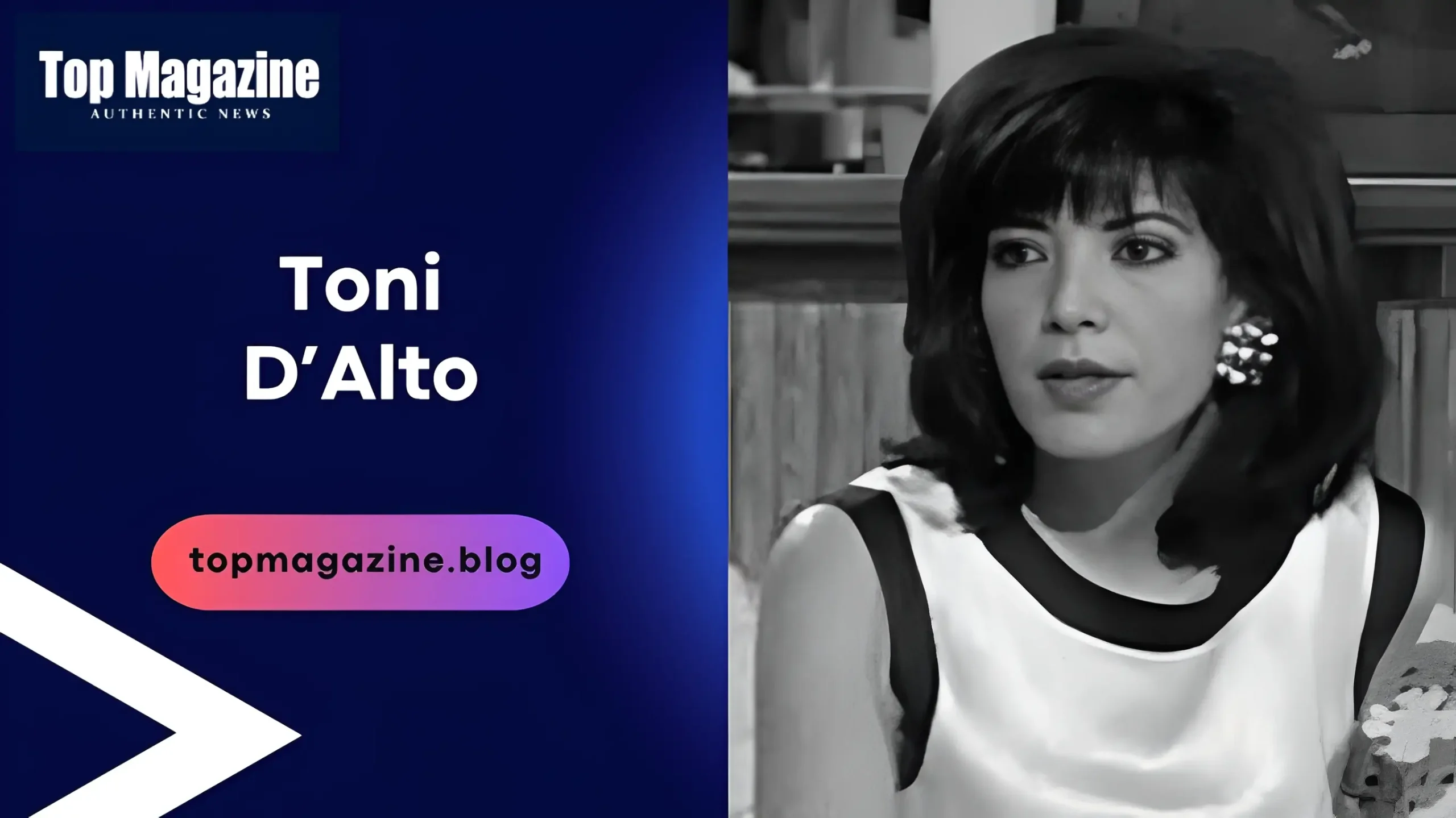
When discussing Hollywood families and their interconnected histories, the spotlight typically falls on the most recognizable names—the leads, the blockbuster stars, the household names that dominate box office records. Yet within every prominent entertainment family exists a network of individuals whose stories deserve equal recognition, personal achievement, and remembrance. Toni D’Alto represents one such figure—a woman whose life, though not defined solely by celebrity associations, encompasses a journey of personal resilience, professional ambition, and meaningful family connections that continue to resonate within popular culture conversations today.
Toni D’Alto, born Toni Ann Filiti in 1964, occupied a unique position within one of entertainment’s most recognizable dynasties. As the half-sister of Sylvester Stallone and Frank Stallone, she existed at the intersection of Hollywood prominence and personal privacy—a balance that many in her position struggle to maintain. Her story is not merely one of association but of individual pursuits, family bonds, and a life marked by both ordinary joys and extraordinary challenges.
This comprehensive exploration examines Toni D’Alto’s life from multiple dimensions: her origins in Philadelphia, her pursuit of acting during a competitive era in Hollywood, her family relationships and personal life, and the legacy she left behind. Understanding her narrative provides insight into the often-overlooked family members who populate Hollywood’s ecosystem, individuals who contribute to the industry and society in meaningful ways beyond the red carpet and marquee lights.
Early Life and Family Background
Toni Ann Filiti was born on May 5, 1964, in Philadelphia, Pennsylvania, a city with deep significance in her family’s history. Her mother was Jackie Stallone, a notable astrologer and health enthusiast whose interests in unconventional wellness practices and astrological philosophy shaped her approach to parenting and life philosophy. Jackie Stallone gained recognition not merely through her children’s achievements but through her own professional pursuits and distinctive personality—she authored books, appeared on television programs, and cultivated a public persona that reflected her passionate engagement with metaphysical and wellness topics.
Toni’s father was Anthony Filiti, a man whose presence in her life connected her to an Italian-American heritage that defined much of Philadelphia’s cultural landscape during the 1960s. This particular union—Jackie Stallone and Anthony Filiti—represented one chapter in Jackie Stallone’s personal life history. The circumstances of Toni’s birth positioned her as a half-sibling to Sylvester Stallone, who had been born to Jackie Stallone and her first husband, Frank Stallone Sr., during the previous decade.
Philadelphia during Toni’s childhood was undergoing significant transformation. The city, while historically important as America’s founding center, was navigating the social and economic shifts of the 1960s and 1970s. Growing up in this environment, Toni was exposed to a diverse urban landscape, working-class values, and a community that valued resilience and personal determination. These early influences would shape her character, work ethic, and approach to navigating the entertainment industry during her adult years.
The Stallone family dynamics during this period reflected both privilege and complexity. Sylvester Stallone, Toni’s half-brother, was beginning to establish himself in the entertainment industry, though his breakthrough success with “Rocky” wouldn’t occur until 1976, when Toni was already twelve years old. Witnessing a family member’s ascent to stardom during one’s formative years creates unique psychological dynamics—there exists both pride in familial achievement and the private reality of leading a less-publicized life alongside someone whose name becomes synonymous with blockbuster cinema.
The Stallone Family Structure and Sibling Relationships
Understanding Toni D’Alto’s position within the Stallone family requires examining the broader family tree and relationships. Jackie Stallone’s marriages and relationships resulted in three notable children who would each chart their own paths through life. The most publicly recognized was Sylvester Stallone, whose transformation into Hollywood’s action-cinema icon fundamentally altered the family’s public profile and media visibility.
Frank Stallone, Toni’s full biological brother (they shared Jackie Stallone as their mother), pursued a career in entertainment as well, establishing himself as a singer and actor. Frank maintained a lower profile than Sylvester but developed a respectable career in music and film, appearing in various productions and releasing several albums. His presence in the entertainment industry provided Toni with a sibling who understood the peculiar challenges and opportunities of Hollywood work.
The distinction between full and half-sibling relationships carries real psychological and social dimensions. Toni’s position as a half-sister to Sylvester meant she existed within the shadow of unprecedented fame while maintaining her own distinct identity and family lineage through her father, Anthony Filiti. This created a particular kind of social experience—she could claim connection to one of Hollywood’s most powerful figures, yet her own identity and achievements existed in a separate sphere.
Family gatherings, public events, and media interactions would have presented Toni with regular reminders of the vast disparity in fame and fortune that existed among siblings. Some individuals might struggle under such circumstances; others thrive by establishing clear boundaries between their public connections and private pursuits. Toni’s approach involved pursuing her own professional interests while maintaining family relationships that, by all accounts, reflected genuine affection and respect.
Toni D’Alto’s Acting Career and Professional Pursuits
While Toni D’Alto is not recognized as a major Hollywood figure in the context of blockbuster cinema or widespread critical acclaim, her pursuit of acting during the 1990s represented a legitimate professional endeavor within the entertainment industry. The 1990s represented a particular era in American cinema—a period characterized by diverse independent films, emerging video markets, television production expansion, and shifting audience preferences.
Her most documented film appearance came in 1996 with “The Appointment,” a project that allowed her to work as a professional actress within the Hollywood system. The 1990s independent film movement provided opportunities for actors who might not secure roles in major studio productions. This era saw the emergence of direct-to-video markets, cable television productions, and independent films that offered legitimate venues for actors to build resumes and gain professional experience.
Pursuing acting in this environment required persistence, audition skills, professional representation, and the kind of dedication that characterizes any career in competitive industries. The entertainment business, particularly for actors not born into industry connections or possessing unusual physical characteristics or marketable identities, demands consistent effort, rejection resilience, and a genuine passion for the craft. That Toni pursued acting during this period suggests genuine interest in the profession rather than mere dabbling.
The reality of working as an actress during this era, particularly outside the A-list sphere, involved navigating auditions, independent productions, smaller-scale projects, and the constant reality that work could be inconsistent. Unlike her half-brother Sylvester, whose star power opened specific doors and created particular opportunities, Toni would have competed in a broader pool of professional actors seeking roles in mid-level and lower-budget productions.
Her decision to pursue acting rather than leverage family connections for different career paths—such as producing, management, or other entertainment industry roles that might have been accessible through her family—demonstrates authentic professional ambition. The choice to work as an actress, specifically, rather than seek industry positions that might have offered greater stability or visibility, reflects a commitment to craft and performance over pragmatic career calculation.
Personal Life and Family as Toni D’Alto
Beyond her professional pursuits, Toni D’Alto’s personal life included significant relationships and responsibilities. She married Louis D’Alto, a union that resulted in the birth of her son, Edmund D’Alto. Motherhood represented a major dimension of her identity and life structure—raising a child while pursuing an acting career requires the kind of multitasking and life management that defines modern women’s experiences across numerous industries and professional contexts.
The experience of being a single mother or managing parenting alongside career pursuits creates particular challenges, rewards, and perspectives. Toni’s approach to balancing these responsibilities reflected the broader social context of late-twentieth-century America, where women increasingly pursued professional careers while maintaining family roles and responsibilities. Edmund represented continuity of the family line and legacy in a different branch of the Stallone-connected family tree.
As a mother, Toni engaged in the daily realities that characterize parenting—school involvement, emotional support, life guidance, and the countless small moments that comprise human development and family bonding. These aspects of her identity, while not publicly documented or widely known, represented profound significance in her actual lived experience. The private achievements and satisfactions of parenting and family relationships often exceed the recognition granted to public professional accomplishments.
Her relationships within the broader Stallone family included connections to nephews and nieces, extended family gatherings, and the complex dynamics that characterize large, partially-connected family systems. These relationships existed both in public-facing contexts (family events that might receive media attention) and in private interactions that defined genuine familial bonds.
Jackie Stallone’s Influence and Maternal Legacy
Understanding Toni D’Alto requires examining her relationship with her mother, Jackie Stallone, a woman whose personality and professional pursuits shaped her children’s worldviews and life philosophies. Jackie Stallone was not merely a background figure in her children’s lives but an active, engaged, and distinctly opinionated mother whose influence extended across multiple dimensions.
Jackie Stallone’s career as an astrologer and health advocate reflected unconventional interests during an era when mainstream society viewed such pursuits with skepticism or dismissal. Her willingness to pursue and publicly advocate for her interests—despite social judgment or conventional dismissal—modeled a form of intellectual independence and authenticity that likely influenced her children’s approaches to their own paths.
As a mother, Jackie Stallone apparently encouraged her children to pursue their own interests and develop their own identities, rather than merely capitalizing on family connections or living in others’ shadows. Her approach to parenting, while undoubtedly complex and multifaceted like all human relationships, seemed to emphasize individualism and personal agency—values that appear reflected in how each of her children navigated their own careers and life choices.
The maternal influence on Toni’s life would have included values related to independence, authenticity, resilience, and the importance of pursuing one’s genuine interests rather than merely accepting predetermined roles. These qualities would have served Toni well as she navigated the entertainment industry and later faced life’s significant challenges.
The Broader Context of Philadelphia and 1960s America
Toni D’Alto’s formative years occurred during a transformative period in American history and urban development. The 1960s and 1970s marked significant social change, cultural revolution, and urban demographic shifts. Philadelphia, as an older industrial city with deep historical roots, was experiencing particular challenges and transformations during this era.
Growing up in this environment exposed Toni to working-class values, community resilience, and a cultural landscape quite different from the entertainment industry she would later enter. Philadelphia’s urban culture, working-class ethos, and historical significance in American identity likely influenced her character development and personal values. The city’s emphasis on practicality, directness, and genuine achievement over superficiality would have provided grounding experiences that contextualized the superficiality and image-consciousness that characterizes entertainment industry culture.
This background contrasts markedly with narratives of children born directly into Hollywood privilege. Toni’s trajectory involved geographical transition from Philadelphia to Los Angeles, social transition from urban working-class context to entertainment industry spaces, and professional transition from civilian life to working actress. Each of these transitions required adaptation, resilience, and the kind of personal growth that characterizes significant life changes.
Legacy and Cultural Memory
Toni D’Alto’s most significant public legacy remains her position within Stallone family history and her connection to one of Hollywood’s most recognizable figures. Yet reducing her legacy to mere familial connection diminishes the actual substance of her life and experience. She pursued professional work in a competitive industry, raised a son, maintained family relationships, and navigated the particular challenges that characterize being related to extraordinary fame while maintaining one’s own separate identity.
Her passing on August 26, 2012, at age forty-eight in Santa Monica, California, after a battle with lung cancer, marked the end of a life still in its middle years. The timing of her death, occurring just months after her nephew Sage Stallone’s unexpected passing, created a particular poignancy within the Stallone family narrative. Multiple family losses within a compressed timeframe would have created significant grief and loss within family structures.
The circumstances of her death—cancer, relatively young age—reflect broader health challenges that affect millions of individuals annually, regardless of socioeconomic status or family prominence. Her mortality, like all human mortality, reminds us of life’s fragility and the importance of recognizing the full humanity and life experience of individuals, whether famous or private, connected to celebrity or living ordinary lives.
Perspective on Fame, Family, and Identity
Toni D’Alto’s life offers particular perspective on the nature of fame, family relationships, and identity formation in modern America. Growing up alongside someone who would become a megastar creates unique psychological and social circumstances. She would have witnessed her half-brother’s ascent, understood the mechanics of his success, and navigated the social reality of being “Sylvester Stallone’s sister” in casual conversations and social contexts.
Yet she pursued her own path, establishing her own identity within the entertainment industry rather than leveraging family connections for undeserved advantages or remaining entirely outside the industry. This middle path—pursuing legitimate professional work while connected to great fame—requires particular psychological resilience and clarity about one’s own values and ambitions.
Her choices reflect broader themes relevant to understanding modern life: the balance between leveraging available advantages and establishing authentic identity, the possibility of meaningful achievement outside the spotlight, the reality that genuine family relationships often lack the drama or significance that public narratives attribute to them, and the importance of recognizing individuals for their actual lived experience rather than merely their social connections.
The Stallone Family’s Interconnected Narratives
The Stallone family narrative has been told and retold through interviews, biographies, and media coverage focused primarily on Sylvester Stallone’s extraordinary success. Yet this family, like all families, contained multitudes—multiple individuals pursuing various paths, experiencing distinct challenges, and contributing to broader family history in ways that extended beyond the most famous member.
Toni D’Alto represented one such understory within this larger narrative. She was simultaneously a supporting character in her famous half-brother’s story and the protagonist of her own life narrative—a woman who made choices, pursued ambitions, maintained relationships, and experienced the full range of human emotion and experience that characterizes any life, regardless of its connection to fame.
Understanding her place within the Stallone family adds dimension to how we conceptualize fame, legacy, and the real human experiences that exist alongside celebrity narratives. The entertainment industry, while glamorized and sensationalized in popular culture, contains countless individuals working at various levels, achieving different degrees of success, and experiencing professional fulfillment or disappointment alongside the other dimensions of human life.
Reflections on Mortality, Memory, and Cultural Significance
Toni D’Alto’s death in 2012, now more than a decade ago, represents a loss that was experienced most acutely by those closest to her—her son Edmund, her siblings, her extended family, and her friends. The broader public, less personally connected, may have noted her passing as an incidental detail within celebrity news cycles, if at all.
Yet this very distance—the gap between public awareness and private grief—illuminates something significant about modern culture. We remember those connected to fame through the lens of their famous associations rather than through the fullness of their actual human experience. Toni D’Alto was someone’s daughter, someone’s sister, someone’s mother, someone’s friend, someone’s colleague, and someone’s wife. She was an actress who pursued her professional ambitions. She was a woman who lived through late-twentieth-century America, experienced the transformations that defined that era, and navigated the particular challenges and opportunities that her specific circumstances presented.
Her legacy, whether widely acknowledged or not, includes the individuals whose lives she touched, the work she contributed to the entertainment industry, the values she modeled through her choices and commitments, and the example she provides of how to maintain authentic identity while navigating significant social challenges and family complexities.
FAQ About Toni D’Alto
Q: Who was Toni D’Alto?
A: Toni D’Alto, born Toni Ann Filiti, was an American actress best known as the half-sister of Hollywood actor Sylvester Stallone. Born in Philadelphia in 1964, she pursued acting during the 1990s and is known for her appearance in the 1996 film “The Appointment.” She was the daughter of astrologer Jackie Stallone and Anthony Filiti, and the half-sister of both Sylvester Stallone and singer Frank Stallone.
Q: What was Toni D’Alto’s relationship to Sylvester Stallone?
A: Toni D’Alto was Sylvester Stallone’s half-sister, sharing their mother Jackie Stallone but having different fathers. While Sylvester went on to become a major Hollywood action star, Toni pursued her own path in the entertainment industry as an actress, though she maintained her own separate professional identity and personal life distinct from her famous half-brother’s career.
Q: Did Toni D’Alto have children?
A: Yes, Toni D’Alto had one son named Edmund D’Alto with her former husband Louis D’Alto. She was a devoted mother who balanced raising her son with her professional pursuits in the entertainment industry during the 1990s and beyond.
Q: What films was Toni D’Alto in?
A: Toni D’Alto’s most documented film appearance was in “The Appointment” released in 1996. She worked as a professional actress during the 1990s, an era that included significant independent film production and direct-to-video markets that provided opportunities for working actors outside the major studio system.
Q: When did Toni D’Alto pass away?
A: Toni D’Alto passed away on August 26, 2012, at the age of 48 in Santa Monica, California. She died following a prolonged battle with lung cancer. Her death occurred just over a month after the unexpected passing of her nephew Sage Stallone, creating a particularly difficult period for the Stallone family.
Q: What was Jackie Stallone’s profession?
A: Jackie Stallone, Toni D’Alto’s mother, was a professional astrologer and health advocate. She authored books, appeared on television programs, and was known for her unconventional wellness interests and astrological philosophy. She was a distinctive public figure in her own right, known for her passionate advocacy of her professional interests and beliefs.
Q: How is Toni D’Alto remembered today?
A: Toni D’Alto is primarily remembered through her connection to the Stallone family and her pursuit of an acting career during the 1990s. While she did not achieve the level of fame of her half-brother Sylvester, she is recognized as a legitimate professional actress and as a member of one of Hollywood’s most notable families. Her life represents an important counterpoint to celebrity narratives, illustrating how individuals connected to famous figures navigate their own identities and professional ambitions.
Q: Did Toni D’Alto appear in any other films besides “The Appointment”?
A: While “The Appointment” (1996) is her most documented film credit, Toni D’Alto worked as a professional actress during the 1990s when numerous independent productions and smaller-scale projects were being developed. The extent of her complete filmography may not be fully documented in public records, as was often the case with working actors in smaller roles during this era.
Q: What was Toni D’Alto’s full name?
A: Toni D’Alto’s full name at birth was Toni Ann Filiti. She adopted the surname D’Alto from her marriage to Louis D’Alto, maintaining this name professionally and personally throughout her adult life.
Q: How did Toni D’Alto’s Philadelphia background influence her?
A: Growing up in Philadelphia during the 1960s and 1970s exposed Toni to working-class values, urban resilience, and a practical approach to life that contrasted with entertainment industry culture. This background likely influenced her character, work ethic, and approach to pursuing professional opportunities in the entertainment industry while maintaining grounded personal values.
Conclusion
Toni D’Alto’s life, though not spanning decades nor marked by the explosive public success that characterizes some Hollywood narratives, represents a full human experience—complete with professional ambitions, family relationships, personal challenges, and individual dignity. She was an actress who pursued her craft during a particular era in American cinema. She was a daughter influenced by an unconventional and accomplished mother. She was a sister connected to extraordinary fame yet maintaining her own separate identity. She was a mother raising a son and providing guidance through his development. She was a woman who experienced illness, loss, and ultimately mortality—experiences shared by all humans, regardless of their social position or connections.
Understanding Toni D’Alto in her fullness—beyond mere connection to celebrity, beyond footnotes in famous family histories—provides a more complete picture of how individuals navigate complex social circumstances, pursue authentic ambitions, and contribute to the human experience through their choices, relationships, and presence in the world. Her legacy, while perhaps not inscribed in major Hollywood records, exists in the lives she touched, the work she contributed, and the example she provides of authentic living amid extraordinary social circumstances.
For More Visits: Top Magazine
